



















Page 73

Uttarakashi leads by example: Recycling waste

0

Uttarkashi, Taking forward the initiative of Prime Minister Narendra Modi of banning single use plastic, a thought he recently reiterated during his monthly radio address ‘Mann Ki Baat.’ Uttarkashi District Magistrate Dr. Ashish Chauhan has put on ground an innovative idea of using plastic waste in construction.

The young, dynamic DM has sanctioned the construction of flowerbeds and benches in and around his office, using plastic bottles in sync with the hills in the background. The idea is simple. To understand the concept of plastic waste disposal management in a creative manner and the importance of creating a plastic waste free environment.

Thus far, close to 3500 bottles have been used in making a 2.5 feet by 12 feet flowerbed outside the Disaster Management Office Complex and with another 2600 quintal of plastic bottles, glass, and wrappers waiting to be reused, one can imagine the transformation from waste to beauty.


This is recycling or upcycling at the very source of where these bottles were found littered. We are trying to reduce carbon footprint by responsible handling of waste and also give people an idea of alternate construction methods using plastic,” adds DM Dr. Ashish Chauhan.

Along with this, the District Magistrate has also restarted the concept of 2016 Swedish ‘Plogging,’ which means jogging and collecting litter together. A simple exercise has turned into a community treasure hunt with officers and residents of Uttarkashi collecting plastic waste while out on a stroll or jog.

The idea has caught the fancy of the young and old, men and women, who can be seen strolling along with bag in hand, collecting plastic litter along the mountain and riverside, encouraging locals and tourists towards better practice of ‘No littering.’

The garbage collected will then be used for similar projects adding value and beauty to the hill district of Uttarakashi, and inspiring like-minded people.

Aman Vohra qualifies for World Strongman Games, 2019

0
Sweating it out for the coveted title of World Strongman

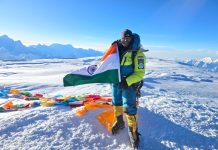
34-year-old Aman Vohra is over the moon. His dreams of qualifying for the World Strongman Games 2019, has come true after years of hard work. Sounding ecstatic, he tells us, “For me personally, qualifying is a great achievement. I know how hard I have worked all these years just to get into this championship.

Born and educated in Dehradun’s Scholars Home and a graduate from DAV PG College, Dehradun Aman entered the world of body building in 2000, moving up the ladder.

Finally Uttarakhand’s ace strongman has become the first and only Indian to be selected amongst 230 athletes from 21 countries for the World Strongman Games, 2019. Telling us more about the upcoming event from 1st to 3rd of November in Florida, United States of America, Aman fills us “the strength game involves a lot of hard work and dedication, which though, a rave in Europe and USA, is still fighting to get its due in India.”

Since the year 2013, Aman has been pursuing his passion with a single-minded pursuit of making it into the World Strongman Games, 2019. In a run up to the event, Aman went to Finland in the year 2015 for the Strongman Games, and won the bronze in 2016 at the  Arnold Classic Amateur Strongman Asia in Hong Kong, Strongman Championship.

Putting in over two hours daily, Aman splits his training into endurance, cardio and strength training, keeping in mind his strict diet that requires him to stay under 90 kilograms. “I fall in the under 90 kgs category, so I have to pay special attention to my diet and limit my carbs, proteins and limit calories.”

A junior and close associate of Aman had this to say about him, “he is hard working, determined and been a mentor and guide to me as well. I wish him all the best for the upcoming championship.”

And so do we.

Gun Hill: Marking hundred years of silence

0
Courtesy Maureen Young

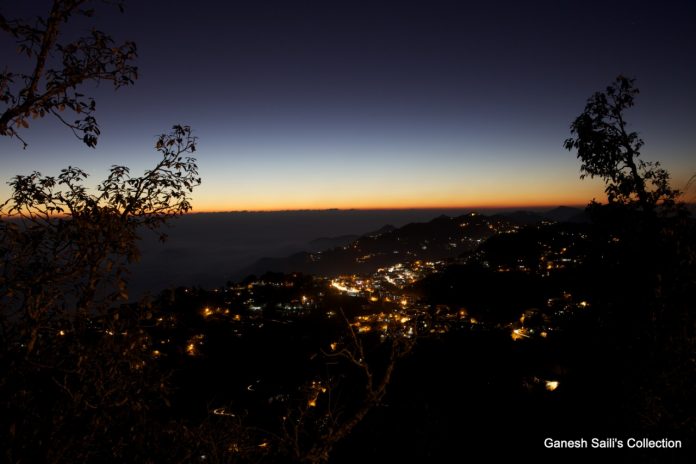
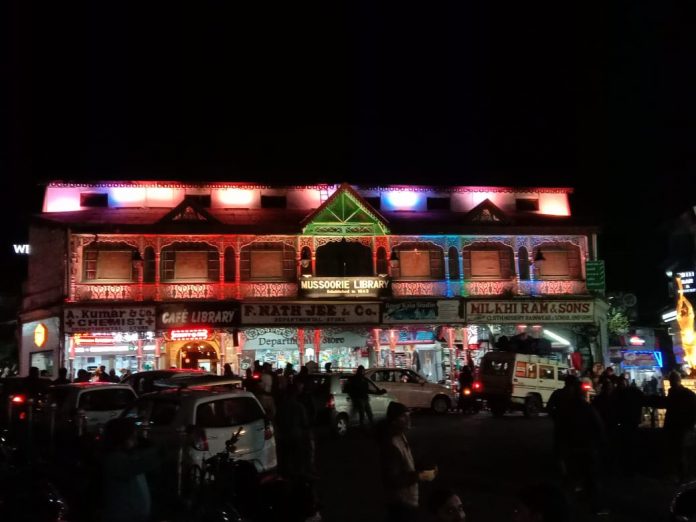
Mussoorie, One of Mussoorie’s many famous tourist spots is Gun Hill. Atop the hill-station’s dominant peak at 7,029 feet, Gun Hill is connected by cable cars’ that ferry tourists from Jhullaghar on the Mall Road. Taking you 1,310 feet in just ten minutes, hundreds and thousands during peak season make this trip a day. For the more determined, a steep walk up to the summit is also worth it.

Very few people visiting the place know that it was named after the Cossipore cannon mounted atop the hill. The gun came to the Mussoorie Municipality shortly after 1857, from the Cossipore Arsenal, Kolkatta which opened in 1801 and is today known as the Gun and Shell Factory.

In times when wristwatches were expensive and clock towers had yet to come, high noon was marked by a blast from this very cannon. In the year 1919, the gun was dismantled and the barrel melted down to replenish depleted armories on the ending of the First World War.

Courtesy Maureen Young

2019 marks a century of this iconic cannon going silent, a fact that even the towns’ residents have conveniently forgotten.  Young chairman Anuj Gupta has plans of getting Gun Hill a gun in the near future, but for now, those nostalgic about Mussoorie share images, clippings and news of yesteryears from home and abroad.


Historian Ganesh Saili tells us, “We were told the boom came by ramming a mixture of moist grass and waste cotton down the barrel.

The Miscellany (1936) adds. Pointed East, Miss Brian and Miss Hamilton – running the Grey castle Nursing Home complained that ‘when the gun fired, it loosened plaster from the ceiling of the wards, which fell on patient’s beds, unnerving them.’ Towards the North it could not be faced because it meant blasting away Mr. Yerborough’s house, Dilkusha. Faced northeast, and came a complaint from Crystal Bank. Swivelled south, the cannon sent the ramrod clean through the roof of Stella Cottage. As a last resort, the cannon faced the Mall.

A hundred years is more than half of the hill stations’ existence and it is milestones like these that shouldn’t pass unnoticed, unspoken or unheard off as it is these precious gems that add luster to the Queen’s crown.

Womennovator: Women entrepreneurship has bloomed in India

0

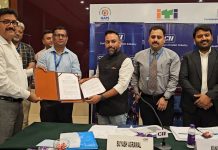
The W-Talk Session, Bengaluru was inaugurated by Tripti Shinghal Somani, Founder Womennovator who enlightened the audience about Womennovator 2019-20 with support of Ministry of Micro, Small  and Medium Enterprises (MSME). W-TALK events are gathering momentum and greater visibility, with each successive event as W-TALKers share their inspiring and extraordinary stories, thoughts, ideas and experiences.

Womennovator is the First Virtual Incubator for Women, determined to support the cause of women empowerment and entrepreneurship and has endorsed the women empowerment principles of UN Goals – SDG 5: Achieve Gender equality and empower all women and girls.

The audience was enlightened about how women entrepreneurship has become a boom in India thus triggering a cascading effect in their zeal and enthusiasm to break free from the home-maker image.  Currently, women entrepreneurs may not be much visible on the radar, in overall women occupy 30% of corporate senior management positions, which is notably higher than the global average (24 percent). It is a great opportunity to learn and  get enlightened  by amazing speakers.

Ms Tripti also shared about the 3 % mandatory procurement policy for  Micro and Small and Medium enterprises owned by women which was proposed by her this year. She shared that this has opened tremendous gateways for women owned businesses to work as Vendor with every Central Ministry /Department / Public sector undertakings and Govt offices. During the W-talk she made attendees aware of other govt. and financial institution support schemes for women.

The event was moderated by Ms. Tripti Shinghal Somani. The speakers shared their motivational stories of how they climbed the ladder of success, including  Ms. Tripti Shinghal Somani, Founder Womennovator, MD KGS advisors – Moderator, Mr. R. Gopinath Rao, IEDS Deputy Director, MSME Development Institute; Ms. Ruparani Ravindran, Founding President, FIWE (Karnataka Chapter), Influencer – Bengaluru, Womennovator; Er. S. Sakamma, PW & WR Department, Karnataka Government; Mr. Irfan Malik, Founder & Director, InQ Innovation, Ms. Sowmya Keshava, Partner, Vidstatus; Ms. Indrani Mukherjee, Co-founder and MD, Bamboooz; Ms. Mahua Mukherjee, Co-founder & Director, The Star in me and Ms. Rina Barreto Shankar, Founder & CEO, Cheree Tree Concepts.

Womennovator (Gvriksh) organized a W-TALK – Bengaluru at National Association of Software & Services Company (NASSCOM), Bengaluru, Karnataka with support of Micro, Small and Medium Enterprises.

Wild Himalaya: In a hundred ages of the God

0
Stephen Alter's latest book 'Wild Himalaya: A Natural History of the Greatest Mountain Range on Earth'

Statutory Confession: Stephen Alter and I have had the good fortune of being born and brought up in the foothills of the greatest mountain ranges in the world. He schooled in Woodstock. I elsewhere. He taught the world over. I elsewhere. Teach we both did. And mercifully that is where this warning ends. Phew! That out of the way, I sit back to read his latest book, which begins in deodar-fringed Oakville, home to generations of the Alter family. Soon I am transported to a moveable feast so fulfilling that I cannot tear myself away. I devour the pages – all 394 of them – in a single sitting.

Much alike the mighty ranges, the book takes within its sweep the extensive mountain chain, from Nanga Parbat to the west to Arunachal in the south-east, a swathe that spreads 1700 miles in length and encompasses an area that is, in places, a 100 to 150 miles wide. Its enormous bulk straddles seven countries: Afghanistan, Bhutan, China, India, Nepal, Pakistan and Tibet.

Pic Courtesy: Ganesh Saili

The Wild Himalaya: A Natural History of the Greatest Mountain Range on Earth, deserves every single superlative. It is, by itself, superlative. You are in the highest mountains; the highest pass; the deepest gorge or meet the highest-living creatures anywhere on earth. And no easy, lazy, laid back arm-chair writing this. Stephen travels to meet the Demons of the Death Zone, at Base Camp of Nanga Parbat, climbed in 1953 but by which time it had already snuffed out thirty lives. “I am confronted by a tall, bearded man, dressed all in black, carrying an Ak-47.’ Luckily for Steve, Halimullah, as it turns out, is to be his police escort – a basic security precaution after terrorists shot dead ten foreign mountaineers and one local guide in what was possibly a botched kidnapping attempt.

 ‘ … away from the mountains, I can still see them in the distance, rising up like waves of light and shadow in my mind,’ he writes, thinking of the delicate water colours by a friend, Tobit Roche. Inspired by the mountain-island of Nanda Devi, 25,645 feet high, called the pearl of the Himalaya, set in the Garhwal Kumaon ranges. The highest mountain in India, it is, with its double peaks linked by a razor’s edge – with a sheer 10,000-foot wall of ice dropping like a plumb line to the inner recesses of the sanctuary. Returning to London, Tobit repaints the mountains, but this time from memory, on larger canvases, with a Himalaya minus the accuracy of immediate observation, but with a dream-like vision.

His finds himself in Everest Base Camp, past the highest settlement in Khumbu in Gorakshep – usually translated as ‘graveyard of crows’. A travelling companion reminds him that ‘gorak’ is actually a raven. Of course at this height, the yellow-beaked choughs with black feathers like crows are aerial acrobats that follow climbers for scraps up to the South Col of Everest.

They are dare-devils, these birds and often plunder the precious bags of mountain supplies. But Stephen’s new friend, makes a face. ‘I don’t like these birds. They say if a climber dies on the mountain, they will peck out his eyes.’

But there is no eye strain when you meet the foremost folklorist in Uttarakhand, the formidable Professor Datta Ram Purohit to witness the Dhol Sagar or the ocean of drumming. There are sixty-four sounds of bird and beast that drummers can turn into beats. There is for instance the territorial cicada’s mating calls that produce sounds of upward to a 100 decibels – with little tymbals and a hollow abdomen, it produces a huge noise like a rock concert. Watch out! It may damage your eardrums. (‘ham ram ram ram ram ram ram ram ram ram tam gam or khini khini khinita ta tani tajhe jhe ta jhi gi ta ….) Purohit explains: ‘The drumming induces a trance but the dancer has to be receptive.’

As we absorb its beat,’ observes Stephen Alter, adding, ‘the rhythm arouses something in our primal, primitive selves and we are often afraid that our bodies may respond with unrestrained passion.’

 A highly recommended read. Especially for those who love mountains magic.

Cleanse and soothe your skin with Shasya

0
Aparajita the face behind the home made natural soaps

Born and educated in Dehradun Aparajita Singh Chilka is making waves in Pune, with Shasya a luxury body and bath collection.

A student of Doon Cambridge School, Aparajita pursued her Masters before she married and relocated to Pune.

A decade there and her artistic gene from her maternal side made her try her hand at making exotic body and bath collection, entirely handcrafted using natural ingredients, just the kind of thing, you need to pamper your skin with.

Soap and Scrub Gift Packs

In the quest for sustainable living, like many of us, Aparajita decided on zero waste and gave up chemical soaps, shampoos and face wash. She experimented making products at home, and after several rounds of trial and error, Aparajita found her products not only easy to make, but also mild on the skin with great benefits for all to see, she tells us, “These products were gentle and far better than the ones that we get in the market.”

Supported by her in-laws and husband Amit Chilka, Aparajita started making soaps from a make-shift studio at home and has been selling them since May this year. What began as a gift to her near and dear ones, who saw the positive results gave birth to Shasya which in Sanskrit means plant based / natural. The products too stand true to their meaning. “The response has been great. More and more people are making the switch from products made of harsh chemicals to natural products, ” she adds.

Soaps
Shasya: home made natural soaps

In the near future Aparajita wishes to spread awareness about sustainable and zero waste lifestyle and promote use of more such natural products. She intends to make toothpaste and deodorants in the near future.

A treat for all kind of skin types, Aparajita offers Lemon, Aloe Vera, Rose, Coffee Shea Butter, Charcoal and Ubtan 100 grams soaps priced between 70₹ to ₹100 which are chemical free, 100% vegan, cruelty free with no Paraben or SLE or SLS.

To order, click: 

https://tinyurl.com/y3fx7uew

Hit Myar Pahaad: Social awareness programme

0

Hit Myar Pahaad is a noble effort by passionate Pahadis’ to spread awareness about #PlannedTourism and #ResponsibleTourism amongst those visiting the hill state of Uttarakhand.

The objective of the social campaign is to create awareness amongst those who impact the State’s fragile environment and to minimise carbon footprint and plastic waste by engaging locals in the initiative.

Pic Courtesy: Raman Shelly

Talking more about the program Hit Myar Pahaad Raman Shelly highlighted various issues that the home state was facing due to unplanned tourist influx. Alcohol being served on beaches along the Ganges, heaps of plastic waste littering the hill-side and many such instances are straining Uttarakhand. “Hit Myar Pahaad is an effort to encourage tourists to plan their visit to Uttarakhand more responsibly and enjoy its scenic locales without leaving behind waste.”

Adding, “We want to minimise single-use-plastic and ensure proper disposal.

While tourists contribute to the hill-state’s economy, it is also true, that an increase in footfall over the past few years has led to an adverse affect on the environment.

Pic Courtesy: Raman Shelly

The central government has taken an initiative to ban the use of plastic throughout the country. Under this the complete ban on single use plastic will be in place by the 2nd of October this year that promises to show positive result in the near future.

The mountains are home to one and all, waste of any kind, is harmful. If rivers are polluted at their very source, it will only get dirtier down stream and this is completely avoidable by encouraging responsible tourism,” Raman adds.

Pic Courtesy: Raman Shelly

To spread the message further, a program was held under the banner in New Delhi Indirapuram Habitat Center. Sanjay Sharma Dermoda, Senior Advocate and Solicitor, Delhi High Court was the Chief Guest at the event along with young, dynamic BJP National Spokesperson Neha Joshi, in which artists Ruhan Bhardwaj and Karishma Shah spread the message with their power packed performance. And a  flashmob put together by talented Team Ashish Bora  took everyone by surprise.

Over the coming months, Hit Myar Pahaad plans to organize similar programs in other cities including Bengaluru.

Why Not you? Second Wind-BMC

0
Picture Courtesy: Dr. Sunil Kainthola
Rearing to go

If you are on the other side of 35, but yearn to get out and climb mountains, big or small, but feel that  that wishful boat has already set sail without you. Dont despair, there is good news for you.

Since 2011, Nanda Devi Institute of Adventure Sports and Outdoor Education has been pioneering Mountaineering Courses in Assi Ganga Valley. What makes NDI stand out is the fact that it offers tailor-made certified thirteen day Mountaineering Course for participants between the age group of 35 years and above, including 5 days for height gain endurance exercise in the hills of Uttarakhand.

Camping, Mountaineering
Camping at Nanda Devi Institute

Dr. Sunil Kainthola the man behind the Nanda Devi Institute a.k.a NDI tells us, “35% of the population in India falls within this age bracket. Entitled the Second Wind – Basic Mountaineering Course (SW – BMC) gives the perfect opportunity for people above the age of 35 who nurture the dream of learning the basics of mountaineering. “


The pilot project held in June this year saw 14 participants from 10 year old to 50 pushing their endurance, strength and energy to the limits at the SW-BMC training. Following its success, NDI now offers five batches in successive order for the months of October and November 2019. The minimum/maximum course strength will be between 14 to 21 participants per batch.

Courtesy: Dr. Sunil Kainthola
Participants learn the tricks of rope climbing

Participants who desire to learn skills from instructors, at times younger than them should get a thorough pre-training medical check-up with a physical fitness certificate of  from a registered medical practitioner.

You also get packing advice so that you know exactly what to carry and what to leave behind. The Second Wind BMC is a formal course and requires cooperation from the participants to make it a success. Some rule of the thumb Dos and Donts have been put in place such as restrictions on mobile usage; prior  permission to roam outside the camp, garbage disposal and more to name a few.

Picture Courtesy: Dr. Sunil Kainthola
Rock Climbing at the camp

Aditi Kaur, who recently completed her SW-BMC training and trekked to Kuflon, Dodital and Darwa Pass, is full of praise. “Its a basic mountaineering course. We started with morning Physical Training, followed by Rock Climbing, Rappelling, zip line over thirteen days. The equipment was top of the line, Instructors well trained. The training saw me walk to scenic locales such as Darwa Pass 3800 meters on foot which I never thought I could accomplish.

If you too wish to put on your walking boots and get outdoors to tick that elusive trek off your bucket-list, then apply online at the given link for upcoming courses.https://ndi.edu.in/second-wind-basic-mountaineering-course/

‘Swachata Hi Seva’ launched with a single-use plastic donation

0

Mussoorie, The ‘Swachhta Hi Seva’ mass movement, which is being run for liberation from single-use plastics like plastic cups, straws etc. was launched by Chairman Anuj Gupta,  Mussoorie Municipal Council.

On the occasion, a rally was taken out from Mussoorie South Road from Landour Market where shopkeepers and households were asked to donate single use plastic. In the rally Keen and representatives of Mussoorie Traders Welfare Association addressed shopkeepers not to use single use plastic.

Children from Sanatan Dharma Inter college, Shishu Mandir and Sanskrit Shiksha School and newly elected President of Mussoorie Post Graduation College were present with their team.

People shouted slogans to be conscious of the garbage. EO Shri MS Shah Ji informed those gathered,  “from October 2 the process of fining single use plastic will also be started. Executive Officers and ward members were also present on this occasion. It may be noted that from September 11 to October 2, the central government will run a cleanliness service movement under which people will be made aware of the ban on single-use plastic.”

Along with the awareness drive, people will contribute to the cleanup drive and plastic disposal. In Mussoorie, 80% people have started segregating  wet, dry and harmful waste under the Hilldaari movement and 10 tons of single use has gone for plastic disposal.

Read-a-thon, an attempt to inculcate reading habit

0

On the occasion of International Literacy Day i..e 7th September, a joint Read-a-thon was organized by SCERT, Doon Library and Room to Read in Dehradun.

Ms Pushplata Rawat, State Coordinator Room to Read, welcomed the participants. The event focused on importance of reading and inculcating reading habit in children under which a Reading Campaign which begun on 5th of September will continue until 14th November, covering schools across the state.

A panel discussion on importance of reading was organized. Panelists Ms Seema Jaunsari, Director ART (Academic Research and Training), Dr BK Joshi Director Doon Library, Mr Mukesh Nautiyal and Ms Simmi, Program Manager Room to Read were part of the esteemed panel.

The discussion brought forth the need of making available a variety of books to children easily. Ms Seema Jaunsari made an appeal to all teachers to engage children with books. Dr BK Joshi is working towards establishing a children corner in Doon Library with age appropriate books. Ms Simmi focused on books for all level of readers, there should be book on children who are just entering the schools as well proficient readers. Mukesh Nautiyal laid stress on writing children literature keeping in mind the interest of children.

There were over 200 participants who participated in Read-o-thon wherein everyone read a book and shared their experience of what role books played in their lives. Story session was conducted for children who participated in the event. The event had participation from all age groups.

Room to Read’s Comprehensive Literacy Approach is aimed at helping children become independent readers for life. All those who participated, took a pledge to read a book to a child.