
















Page 36

Swami Rama remembered by his followers on World Yoga Day

0
Swami Ram

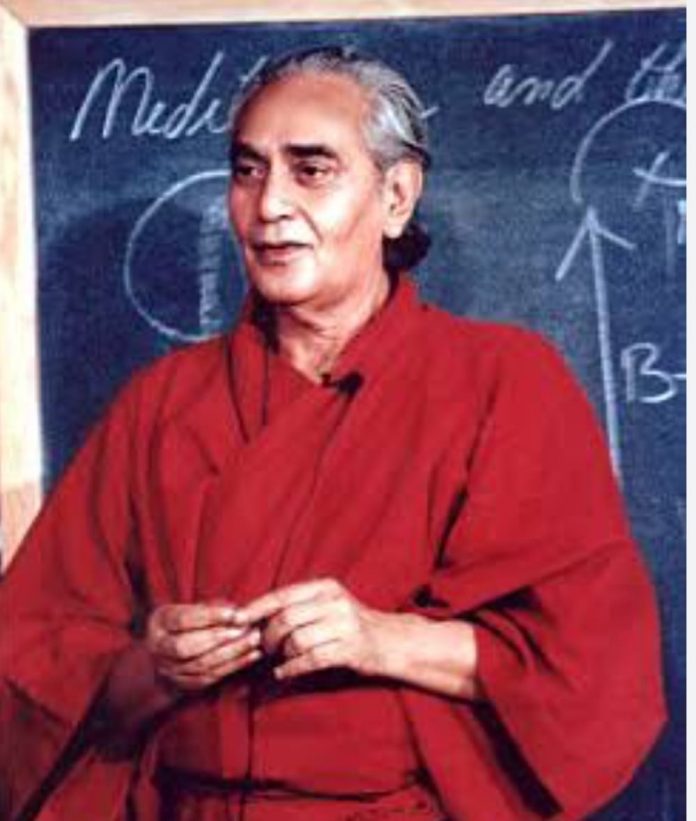
Renowned Yogi Swami Rama who made Yoga famous across the world, was remembered on World Yoga Day. Swami Rama taught that anyone can achieve an incredible and great life after following Yogic ways which have been scientifically proven and are most relevant in the context of present day scenario.

Swami Rama was born in 1925 in Toli-Malla Badalpur, Pauri Garhwal. He adopted Sanyas Dharma at the young age of 13 and learnt Hinduism and Buddhism at several places. He became Shankaracharya of Karveer Peeth at the age of 24 after getting formal religious education from Prayagraj, Varanasi and other places.

He reached America in 1969 to convey the message of yoga and meditation to the western civilization on instructions of his Guru. He astounded the scientific community by making his heart stop beating through Yogic practice. His research was published in Encyclopaedia Britannica Year Book of Science and Nature Science Annual in 1973 and World Book Science Annual in 1974.

Swami Rama was a scholar of Indian Upanishads, philosophy but he also had great knowledge of modern science. In his autobiography ‘Living with the Himalayan Masters’ he has mentioned many miraculous saints and their life lessons.

Swami Rama had a dream of establishing a world class medical institute in Uttarakhand, for the benefit of locals who were deprived of good medical facilities. Following his dreams, he established the Himalayan Institute Hospital Trust (HIHT) in the valley of the Garhwal Himalayas in 1989. Later Rural Development Institute (RDI) was established in 1990 and Himalayan Hospital in Jollygrant in 1994 for the purpose of providing health facilities to rural areas. Realizing the shortage of doctors in the state, Swamiji established the Medical College in 1995.

After Swami Rama passed away in November 1996, Dr. Vijay Dhasmana, a member of the Presidential Committee of the Trust and the Chancellor of Swami Rama Himalayan University (SRHU), took up the task of realizing Swamiji’s objectives and dreams. Under the leadership of Dr. Dhasmana, the trust is on the path of continuous success. The Trust established the Cancer Research Institute (CRI), a state-of-the-art hospital for cancer patients in 2007. In 2013, Swami Rama Himalayan University (SRHU) was established in Jollygrant, achieving a significant breakthrough in the field of education.All the students including of the Himalayan School of Yoga Sciences (HSYS), are taught the yoga philosophy of the founder Swami Rama.
Dev: Speaking in Colour

0
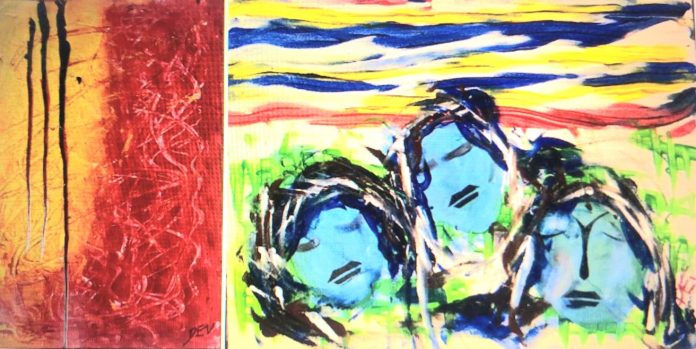
Dev's creations

Dateline Dehradun: Block coming Sunday i.e. 25th of June. Yellow Marigold is playing host to an exhibition-cum-sale by a young talented artist from Dehradun, Dev.

Turning 18 this month, Dev might struggle with his specific needs but he challenges you with his visual poetry. His art allows his audience to take a glimpse into his world of colourful imagination. From breathtaking landscapes, flourishes of flowers, raindrops, gods and goddesses, each and every painting talks to you about Dev’s love for life. While a sponge, knife, tissues or pencil ends create texture in his paintings, he fills in colours under the watchful eyes of his art teacher who guides him patiently. And when the young lad is not busy with colours he is either enjoying music, astonishing you with his computer skills or in water. But his first and true calling remains colours!

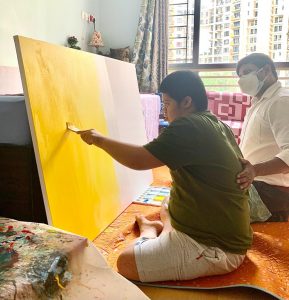
Dev engrossed in adding colour to the canvas

When Dev was born the paediatrician expressed certain doubts but his parents thought otherwise and provided young Dev the most loving home environment they possibly could. Born with Trisomy 21 which means, each cell in the body has three copies of the chromosome 21 instead of the 2, the most common cause of birth defects worldwide.  Children born with this chromosomal deficiency grow and learn slowly, with short attention spans. Not getting bogged down by naysayers they consciously surrounded themselves with medical and support system that believed in life’s immense possibilities.

Parul Kala, Dev’s dotting mother tells us, “At the age of 8, Dev started attending painting classes. The result was a riot of colours. Slowly he was able to use his fingers to express himself. His masterpieces were created from water soluble paints and oil.” She further adds, “He was not non-verbal any more. Dev paintings speak oodles about his determination to express himself. When he started he was unable to hold the paintbrush for long, and so started to use his fingers. And the results are  now for all to see.”

Dev exhibition cum sale

Ella Garg, the Owner and Curator of the exhibition adds, “Yellow Marigold and Dev welcome you into our world. A world that is a celebration of colourful life canvass. This event is close to my heart as it is all about building community of people from all walks of life. It’s about breaking biases!

Dev’s paintings maybe viewed on his Facebook page : www.facebook.com/paintingsbydev

Lessons, queries and questions from Kedarnath calamity

0
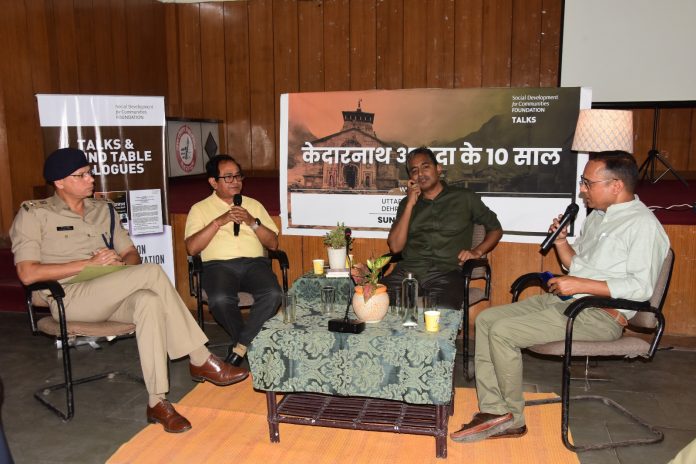
Panellists at SDC Dialogues

A decade since the Kedarnath calamity took place in 2013, a community dialogue was organized by Social Development for Communities (SDC) Foundation at the Uttaranchal Press Club, Dehradun. Experts from various fields and eminent citizens stressed on taking lessons from the horrific disasters in the state. At the same time, they expressed concern over indiscriminate construction in the Himalayan regions and the huge rush of tourists.

Geology Expert and Adjunct Professor, HNB Garhwal University, Dr YP Sudriyal said that the crowd coming to the Himalayas including Kedarnath is only increasing. “If it is not managed properly, a tragedy like 2013 can happen again,” he said, and added, “After the 2013 disaster, we conducted a survey and found that the Kedar valley had a capacity for only 25,000 pilgrims to stay, but that night there were 40,000 people there. Now this balance has deteriorated further. The road which was earlier branded as All Weather has now been branded as Char Dham Marg project.” He emphasized that landslides are occurring on this road throughout the year. In such a situation, gathering more and more people in Kedarnath should be avoided. “We have to take care of the holding capacity of the Valley. We have also seen the result of unplanned development in Joshimath. On these issues, the government should listen to experts and involve them in the policy process,” Sudriyal added.

Participating in the discussion, senior journalist Hridayesh Joshi said that work is being done against the opinion of scientists in Uttarakhand, due to which the precariousness of disaster situations persists. “We should insist on sustainable roads instead of wide roads. People are asking for roads in their villages but aren’t being heard. The formation of SDRF after the Kedarnath disaster is a major achievement, but we have not been able to develop a warning system in the Himalayas as is in place in the coastal areas. The 2021 Raini disaster is an example of this. We do not have a mechanism to monitor the lakes. Environmental concerns are brushed aside in lieu of development plans,” he said.

SDRF Commandant Manikant Mishra, who was also a panelist, said that this disaster was not limited to Kedarnath, but the entire Uttarakhand was affected by it. SDRF was formed on the basis of those experiences. In the 10 years since the disaster, there has been a change in the attitude of the administration and the public that such a disaster can come at any time, and we have to be prepared for it. At present, we have five companies deployed at 42 locations. It is planned so that one can reach any accident site in the shortest possible time. “Now we have better forecasts too. Weather forecasts are coming up to the micro level. Due to the increasing number of tourists in the state, the challenges of dealing with accidents have increased. For this, the jawans are given training in personal rescue and paramedics. There is also a special team for high altitude rescue,” he said, and advised tourists coming to Uttarakhand to be alert about weather reports and travel keeping in mind the geography and climatic conditions.

 The programme was moderated by senior journalist Sanjeev Kandwal while the inaugural session was moderated by Prerna Raturi. On this occasion, Anoop Nautiyal, Prof. Dr. Harsh Dobhal, Dr. Avinash Joshi, Dr. Sushil Upadhyay, Dr. Madhu Thapliyal, Dr. SP Sati, Ranbir Chaudhary, Pradeep Mehta, Sanjay Joshi, Ganesh Kandwal, Jai Singh Rawat, Rahul Kotiyal, Pradeep Kukreti, and many others were present.

Dr Rajendra Dobhal takes the reins as VC Swami Rama Himalayan University

0

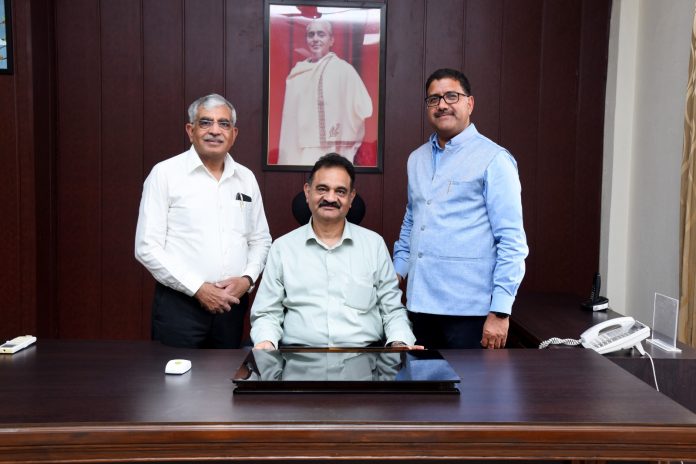
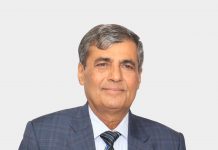
Dr Rajendra Dobhal assumed charge as Vice Chancellor Swami Rama Himalayan University on 15th June 2023.

At a brief ceremony held at the university, Chancellor, Dr Vijay Dhasmana formally inducted the new member into the SRHU family. Prior to this new appointment, Dr Dobhal was Director Strategic Planning, Research and Development at SRHU.

Former Director General, Uttarakhand State Council for Science and Technology (UCOST), Govt. of Uttarakhand, Dr Rajendra Dobhal comes with decades of exceptional experience in diverse fields. Praising Dr Dobhal’s past accomplishments, Dr Dhasmana stated, “I am delighted to have him lead our university. I am certain he will prove to be a valuable asset to SRHU in times when there is great resurgence in the higher education landscape. We expect him to do amazing work here by aligning with our vision and motivating and inspiring our team.” He further added, “As an academic leader he has to shoulder immense burden and responsibility to steer SRHU on the path of excellence, harness collective talents of faculty and students, and make it an integral part of the international academic community by promoting intensity of thinking and inculcating strong research culture.”

Dr Dobhal has also been associated with various important committees of Central and State governments. He steered the constitution of task force on mountain agriculture and allied sectors in Uttarakhand (Rural Development and Migration Commission, Uttarakhand). He was Member-CSIR-NISCAIR Research Council; Secretary – National Academy of
Sciences India, Uttarakhand Chapter; Councilor – Integrated Mountain Initiative, New Delhi; Member TIFAC (Technology Needs Assessment) Project for Forestry Sector; and Member Task Force for Implementation of National IPR Policy.

He has contributed to the Study of Himalayan Glaciers and has been an integral part of good governance committee of different Universities. Dr Dobhal has also occupied positions of eminence with organizations such as National Research Development Corporation, Uttarakhand Science Education and Research Centre, Uttarakhand Space Application Centre, and Uttarakhand State Biotechnology Board.

A widely travelled scientist he was instrumental in signing numerous MoUs with organizations like Council of Scientific & Industrial Research, Ministry of Science & Technology, GoI; European Business and Technology Center while serving Government of India and Riverbank Filtration (RBF) Technology transfers from the University of Applied Sciences, Dresden, Germany.

HIMS trains people in life saving skills

0

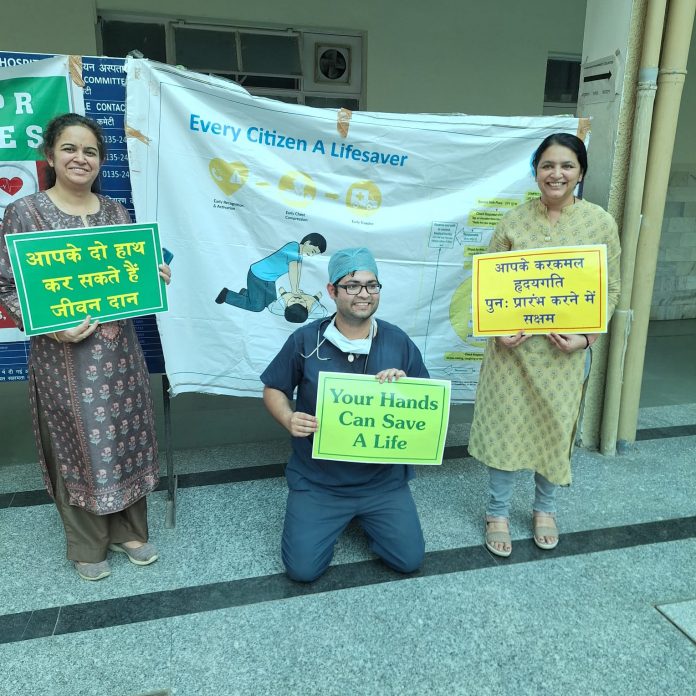
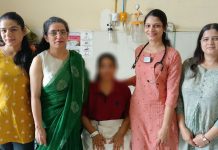
Himalayan institute of Medical Sciences, in collaboration with Indian Society of Uttarakhand State Chapter and Indian Resuscitation Council Federation, taught life saving skills to common people.

Dr Parul Jindal, State President, ISA informed that their society has started a mission to teach every resident of Uttarakhand skills to save a life. Similar trainings have been conducted at Rishikesh, Haridwar, Dehradun, Almora, Roorkee and Srinagar in past two months. School children, teachers, business men, security guards , lawyers, policemen and laypersons have been trained by ISA.

The team has now reached a target of 2500 at Himalayan Hospital. The head of the department, Dr Veena Asthana informed that everyone needs to be trained, as post COVID people have assumed a sedentary life style and have complications that need to be attended to. This type of training saves lives and is the need of the hour.
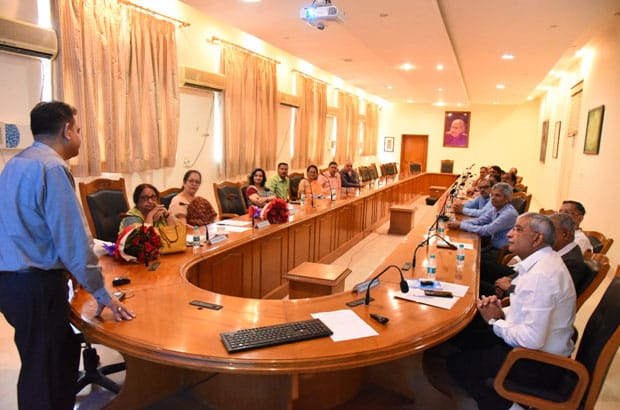
The training was imparted by Dr Nidhi Kumar, who stressed upon the importance of correct technique. Dr Vinayak Saran, Renu and James were part of the team.

SRHU’s First Research Advisory Committee Meet held

0

The first meeting of the Research Advisory Committee held in Swami Rama Himalayan University included Chairperson of the committee Dr. Manju Sharma (FNASc, FNAAS, Padama Bhushan, Former Secretary, Dept. of Biotechnology, Govt. of India, Chairman, New Initiative, NASI, Allahabad), and member, Prof. Paramjit Khurana (FNA, FASc, FNASc, FNAAS, FTWAS, J.C. Bose National Fellow, Department of Plant Molecular Biology, University of Delhi South Campus) .

The external members appreciated the University official for a good research oriented environment with amalgamation of basic research science and therapeutic clinical experience in the campus. It was also suggested that Swami Rama Himalayan University can be a center for local plant based nutraceuticals.

The external members of the committee were welcomed by Dr. Rajendra Dobhal, Honorary Director, Strategic Planning and R&D of the University. Dr. Vijendra Chauhan, Vice Chancellor, SRHU presented an overview of the University in reference to the vision and mission of Swami Rama to the committee members. Dr. Sunil Saini apprised the members about the research in the field of Tissue Banking, Palliative & Supportive Care and Genomic Landscape of Breast Cancer in Young Women.

Dr. Jayanti Semwal presented over all status of the research activity at HIMS. She informed to the committee members about use of electronics health records for hospital based research and to explore avenues to generate resources for self-sustenance.

Further Dr. Rajeev Bijalwan apprised the members about the health program being run by the Rural Development Institute that includes social welfare, health beneficiaries, water sanitation water security and capacity building programme to improve livelihoods of the people of the various regions of the Uttarakhand.

Dr. Sanjay Gupta presented the research that will benefit the society. The main area of their research are Plant Microbe Interactions: Mineral Bio fortification, Stress mitigation, Plant growth Promotion, Nutraceuticals, Biogenic nanomaterials for agronomic and biomedical Applications, Mushroom Cultivation etc.

Dr. C S Nautiyal, Scientific Advisor of the University informed to members that research is going on with combined efforts of Cancer Research institute, Himalayan School of Biosciences and Orthopedics’ Department of the University to develop an medicine to help the cancer patients. The meeting ended with thanks to the chair.

Himalayan Hospital hosts National Neonatology Forum Expert Meet

0

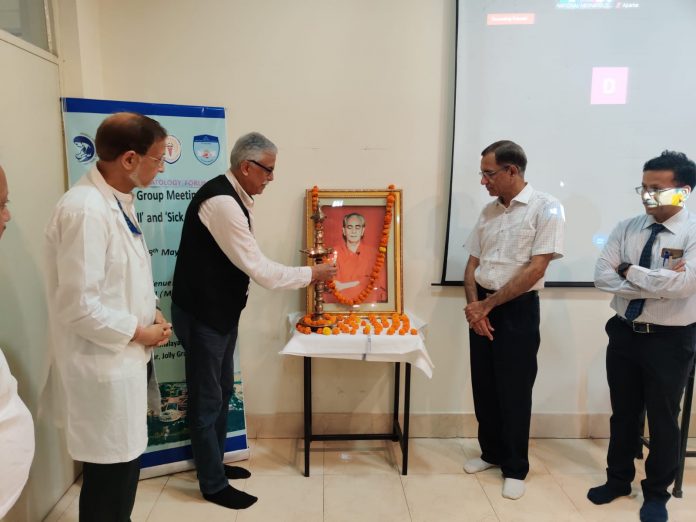
A two-day expert group meeting was organised on the 1st of June 2023, by the National Neonatology Forum (NNF) in collaboration with NNF Uttarakhand at Himalayan Hospital, Dehradun.

Forty experts from all over India attended the meeting physically, and fifteen virtually.

Inaugurating the event, Principal Himalayan Institute of Medical Sciences Prof Ashok Deorari, highlighted the need for developing a comprehensive module for teaching and training of health care workers that can improve knowledge base and skills of Neonatal Healthcare Workers to further improve intact neonatal survival.

Dr Anu Sachdeva introduced the agenda and plan of action for the two days. Deliberations over various aspects of improving care of small and sick newborns came to valuable conclusions.

NNF India President, Prof Praveen Kumar presided over the meeting.

It was emphasized that the module should be made simple and engaging to be effectively implemented all over the country. NNF India Secretary, Dr Surender Singh Bisht along with others, felt that alignment of the module with already existing resources is important.

World Health Organization Advisor, Dr Rajesh Mehta reiterated that NNF has been doing excellent work in improving health of newborn in the country, and appreciated the efforts of all gathered for a good cause. He requested that the efforts continue in the future with prime focus on saving newborns.

Menstrual Hygiene Summit held at Himalayan Hospital

0
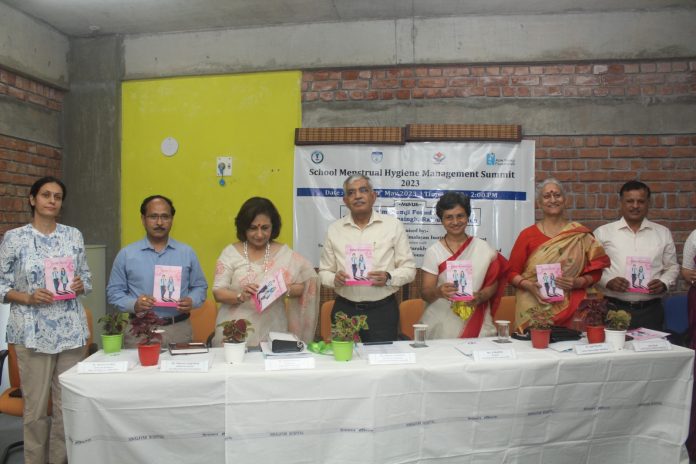
Menstrual Hygiene Summit unveiling 'pahle kadam.'

In a significant step towards promoting menstrual hygiene, the ‘School Menstrual Hygiene Management Summit’ was a significant event held at Himalayan Hospital, Jollygrant.

Rural Development Institute-Himalayan Institute Hospital Trust (Himalayan Hospital), Dehradun, in collaboration with Azim Premji Foundation and the Uttarakhand State Education Department, organized the summit. The summit brought together educators, policymakers, health professionals, and students from across the state to address the critical issue of menstrual hygiene in schools.

The summit began with an opening address by Dr. Rajeev Bijalwan, Deputy Director RDI- HIHT who emphasized upon gender integration in menstrual hygiene management. One of the key highlights of the summit was the inauguration of “Pahle Kadam” a book developed by RDI on menstrual hygiene.

Dr Vijendra Chauhan, Vice Chancellor, SRHU, started by saying, “there are more misconceptions and myths than the number of problems in the menstrual cycle. It will be possible to remove these misconceptions and myths only when we address adolescent girls and women through programs like ‘School Menstrual Hygiene Program.”

Dr. Geeta Khanna, Chairman Uttarakhand Child Right Protection Commission praised the work done by NGOs on menstrual health and hygiene. She emphasized upon working with the government as only then we can take such programs to a larger level. She said, ” such programs should be done more in public, only then we can reduce the misconceptions and taboos in society.”

Dr Jyoti Sharma, who delivered the Inaugural Address emphasized upon girls and women being supported in managing their periods safely and with dignity. She addressed proper menstrual product usage, personal hygiene, and the importance of access to clean water and sanitation facilities. She also stressed upon the importance of sex education which should be incorporated in the school syllabus.

Mahavir Singh Bisht, Deputy Director of Secondary Education, explained in detail about the efforts being made by the government. He believed that the collaboration of NGOs and other organizations with the government can make programs like school menstrual hygiene management programs very successful and effective.

Rural Development Institute – Himalayan Institute Hospital Trust Director, B. Maithali stated that we must give as much importance to the boys as we give to the girls and only then can we make this program successful. She highlighted the need for breaking gender stereotypes and involving men and boys in conversations surrounding menstruation.

Dr. Bharti Dangwal, Senior State Program Manager, American Indian Foundation Uttarakhand emphasized on promotion of menstrual hygiene in rural areas through MHM programs while Deepa Kaushalam, Program Director, Astitva Foundation, delivered a compelling address on gender integration in menstrual health management.

From Swami Rama Himalayan University, Dr Neerul Pandita, Dr. Enas Mushtaq, Dr. Neha Sharma, Ms Neelam Pandey, and Dr Rajeev Bijalwan also shared their experiences and views on menstrual hygiene management.

Australian university decision impacts overseas students

0
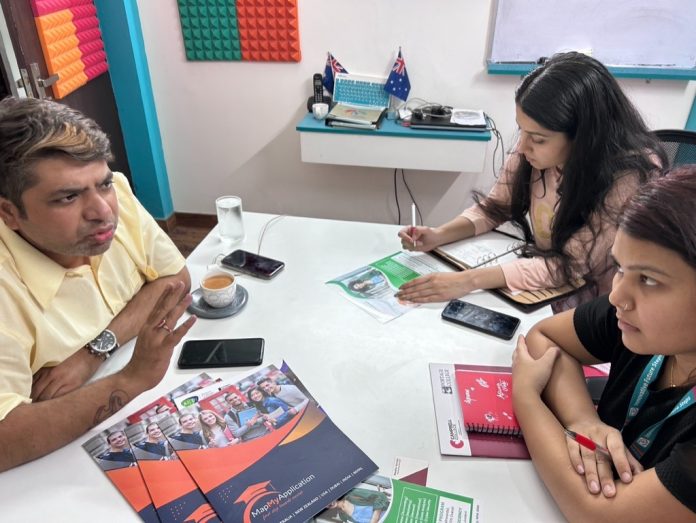
IFS students in class

Dateline Dehradun: Students making a beeline for further studies in any of these Australian universities of Federation University, Western Sydney University, Victoria University, Edith Cowan University, the University of Wollongong, Torrens University including agents affiliated with Southern Cross University might need to re-think.

Amidst surge in ‘fraudulent applications’ from Uttarakhand, Haryana, Gujarat, Uttar Pradesh and Jammu and Kashmir there has been a noticeable tightening of scrutiny on Indian students’ applications in the above mentioned universities in Australia.

Over the years, unethical agents from certain areas of the country submitting fake and fraudulent documents has led five Indian States to be highlighted as ‘high-risk.’ However, this approach has drawn wide-spread criticism for its generalized nature that contradict the very principles of equal opportunity and fairness that Australia upholds.

 Uttarakhand students impacted

Mr. Ravinder Virmani, Director of Innovative Future Steps, a prominent overseas education consultancy in Dehradun, expressed his concerns stating, “it is grossly unfair and discriminatory to ban an entire state. Not all students or educational institutions from these regions engage in unethical practices. We put checks and balances in place to ensure a seamless and transparent process is in place. Our consultancy is based on honesty, transparency and reputation and that is why we have a 98% visa success rate.”

Suggestions have come in from all quarters: Instead of implementing a blanket ban, educational providers can adopt more rigorous measures to verify applications, leveraging the existing Genuine Temporary Entrant (GTE) mechanism to identify potential fraudulent individuals. Implementing checks and balances at various levels, including agents, EduTech portals, education providers and the Department of Home Affairs (DHA.”

Concern has grown over how unethical and dishonest players within India have tarnished the reputation of the industry. Virmani further added,  “Students and parents must understand that following unethical advice or engaging in dishonest practices recommended by unscrupulous agents or consultants can negatively impact their child’s future. It is crucial to prioritise the student’s genuine educational aspirations over deceptive “package” deals that serve as a scam.”

With the Indian Ministry of External Affairs taking note of the situation, it is expected that the Australian government will urge the universities to reconsider their decision as denying genuine students from high-risk regions equal opportunities would be unfair.

PTE gets approval for Student Direct Stream visa into Canada

0
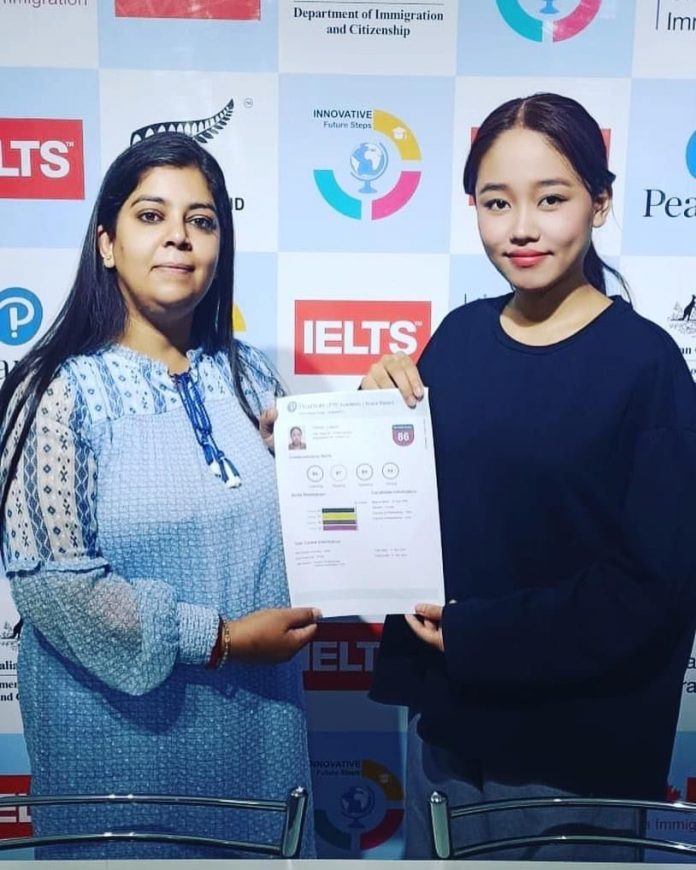
IFS in Dehradun

Dateline Dehradun: In a news concerning thousands of aspiring students who would like to study in Canada, Pearson today announced that it had received the approval from Immigration, Refugees and Citizenship Canada (IRCC) for PTE Academic to be accepted for all SDS (Student Direct Stream) applications.

Welcoming the positive step, Mr. Ravinder Virmani, Director of Innovative Future Steps– a leading PTE & IELTS coaching center in Dehradun said, “this will greatly benefit students aspiring to study in Canada. PTE has test centers globally and students get their results in less than 2 days on average.”

What is Student Direct Stream?

Student Direct Stream (SDS) is an expedited study-permit process for students applying to study in Canada from Antigua and Barbuda, Brazil, China, Colombia, Costa Rica, India, Morocco, Pakistan, Peru, Philippines, Senegal, Saint Vincent and the Grenadines, Trinidad and Tobago, and Vietnam.

As per IRCC figures for 2022, Canada reached an all-time high for international students. By  the end of October last year, IRCC had processed over 750,300 study permit applications.

Class in progress at Innovative Future Steps

Who can take PTE Academic?

PTE Academic (Pearson Test of English Academic) is a computer-based English language proficiency test that is widely accepted by universities, colleges, and governments around the world. It is primarily taken by non-native English speakers who are seeking to study abroad or immigrate to English-speaking countries. The test measures an individual’s English language skills in the areas of speaking, writing, listening, and reading.

It’s important to note that the specific requirements and acceptance of PTE Academic may vary depending on the institution or organization you are applying to. It is recommended to check the official websites or contact the relevant institutions to confirm their specific English language proficiency requirements and whether they accept PTE Academic as a valid test score.

About Innovative Future Steps

Innovative Future Steps, one of the best PTE & IELTS coaching center in Dehradun was established in the year 2014. Over the years, Innovative Future Steps has helped over hundreds of students’ study abroad in prestigious universities and colleges based in Australia, Canada, New Zealand etc. IFS is also the first recognized PTE center in Dehradun.

For more details visit https://www.futurestepsedu.com/