


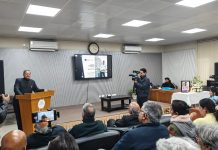






























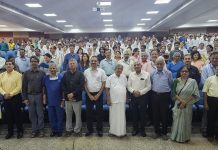




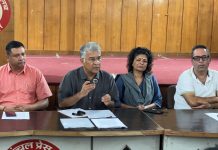
Dateline Doiwala: As part of National Pharmacovigilance Week, the Department of Pharmacology of the Himalayan Institute of Medical Sciences (HIMS), Jolly Grant, organised an awareness programme.
At the program held in the Adi Kailash Auditorium, Dean HIMS Dr. A. Shariff said that drug safety is not the responsibility of doctors and health workers alone. The participation of patients and the general public is equally important. People should report any suspected adverse effect experienced after taking a medicine to the concerned health worker or through the designated reporting channel.
Dr. D.C. Dhasmana said that pharmacovigilance is the means by which adverse drug reactions occurring after the use of medicines are monitored. He said that if any unusual or adverse effect appears after taking a medicine, reporting it is extremely important. Information received in time helps in identifying the potential risks associated with medicines and in improving patient safety.
Head of the Department Dr. Taruna Sharma said that this year’s campaign has placed special emphasis on the use of digital platforms. She explained how mobile apps, QR codes and other digital means can make the reporting of adverse drug effects easier and faster.
The chief speaker at the programme, Dr. Lalit Gupta, Director of the Department of Pharmacology at Lady Hardinge Medical College, New Delhi, delivered a lecture on understanding the relationship between adverse drug events and assessing their causes. He shared important information on understanding adverse events occurring after taking medicines, their causes, and how to identify them correctly. He said that the safe use of medicines is a shared responsibility of all. With the cooperation of health workers, patients and the general public, medicines can be made safer and better protection of patients’ health can be ensured.





, Jolly Grant)