














Page 3

Book Review:  ‘Above and  Beyond  ( A & B): Exploring the Amazing World of Aviation’

0
 ‘Above and  Beyond  ( A & B): Exploring the Amazing World of Aviation’

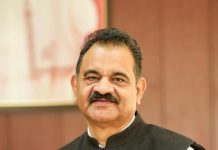
Do visit India International Centre on 7th October, 2025 to the book launch of ‘Above and  Beyond  ( A & B): Exploring the Amazing World of Aviation’ by the Union Civil Aviation Minister Ram Mohan Naidu, a book reviewed by Festival Director Valley of Words, Dr Sanjeev Chopra.

‘Above and  Beyond  ( A & B): Exploring the Amazing World of Aviation’  by  the CISF  veteran Shiv Kumar Mohanka is certainly India’s, (and perhaps the world’s) most comprehensive ‘cover- to- cover’ offering about  anything and everything connected with aviation – from the earliest history of aerial reconnaissance by l’Entreprenant, a lighter- than-air balloon by the French army in their engagement with the Austrians in Battle of Fleurus in 1794 to the remote controlled drones of today which hit precise targets at the time and place of choosing by their handlers.

This monumental work of five hundred plus pages is encyclopaedic in its range of every possible entry in the dictionary of aviation. The work is spread over eight chapters, with the first two relating to the infrastructure design, operations and management of airports.  From the naming, (and renaming) of airports to the protocol related to transport of everything – from human beings to race horses, from mobile phones to life saving drugs – every possible aspect of the physical infra of the airport and the aeroplane are covered. The third chapter is on environmental concerns and safety considerations, as also of their interconnectedness. We learn about the Environment impact assessment of aviation, as also of aviation meteorology. Today, pilots can avoid hazardous weather conditions like turbulence, thunderstorms and poor visibility based on critical information regarding atmospheric conditions like temperature, wind speed, wind direction, visibility and cloud cover.

Mohanka tells us about the bothersome phenomenon of ‘icing’ which occurs when an aircraft flies through clouds containing supercooled water droplets that freeze upon coming into contact with the aircraft’s surface. This is one of the major causes of   fatal air crashes. A&B has spelt out the evolution of aircraft communication systems over the last eleven decades – from the first, hesitant trial round of ‘wireless telegraphy’ by the Royal Flying corps in 1912 to the VoIP (voice over internet protocol) by the turn of the century. As things stand today, the aircraft communication technology is   marked by new digital and advanced satellite-based systems, and   the integration of AI in this chain.

Perhaps the chapter of A&B which will resonate most with the readers is that which deals with passengers and pilots – for at the end of the day, the entire ecosystem exists for these two key stakeholders. In fact, in my view, passengers take precedence even over pilots – for if passengers do not put in their money to undertake the journeys which they do – the aviation sector would have a crash of the financial kind!  We become aware   about the rights of the air passengers as well as the charter of duties of airlines and the airport authorities. We also learn that many times, one passenger’s preferred choice – like that of an accompanying pet – could be a nightmare for her co-passengers.  The   airlines do make an effort to ensure the right balance!

Mohanka is in his elements when it comes to safety and security challenges. Having spent more than three decades in the CISF – India’s premier security agency which handles all airport security, we learn how   over the years, and especially after 9/11, passengers are now more than willing to co-operate with the security procedures at airports. A frequent flyer like Martina Navratilova has said ‘security used to be an inconvenience sometimes, but is now a necessity all the time’.  We learn about the history of hijackings – starting from the first incident in Peru in 1931 to the politically motivated and terror linked cases which peaked in the sixties and seventies, after which three major international agreements – the Tokyo, Hague and Montreal conventions were signed to address crimes on aircraft, hijacking and (potential) sabotage respectively. The point to note is that even amongst nations which are competing with each other on every single parameter – there is an unanimity that come what may – hijacking of aircraft cannot be tolerated. This is ensured by banning items like firearms, knives and pepper sprays on the person of the passengers.  In India, this is drawn up by the BCAS, and enforced in letter and spirt (to the tee) by the CISF. No wonder then, that at airports across the country, we have panels which display the pictures of CISF personnel who have done their duty with meticulous care and responsibility.  Irksome though frisking and baggage checking maybe, everyone now realizes that it is for passengers’ own safety and security. However, it must be placed on record that thanks to apps like DigiYatra, the process is much smoother than it was up until last year when there were multiple queues – for airport entry, at the airline counter as well as for security check.

In Sneak Peek into history, Mohanka gives us the ‘helicopter’ view of the aviation industry, for   there are many operations which a commercial airline cannot do. While it is great to transport humans and cargo from one airport to another – for terrains that are rugged and for operations that require landing in places which are remote, as for example: oil rigs, medical evacuation, military operations and outer space explorations, we have to fall back on helicopters. The author turns poetic when he calls the helicopter as ‘an aerial virtuoso, with the remarkable talent of vertical take offs and landings, midair suspensions like a graceful ballet dancer, and fluid movements in all directions – forward, backward and sideways’.  This is why ‘choppers’ can operate with minimal facilities and from almost anywhere – be it a crowded urban setting, or a remote, unchartered territory in the higher reaches of the Himalayas.

It was the Italians who introduced air power to modern warfare, when in 1911, their aviators took to the skies in their war with Turkey. And from then onwards there has been no looking back. By the end of the First world war, military aviation had rapidly evolved to embrace diverse roles – from artillery spotting to air superiority, bombing, ground attacks and anti-sub marine patrols. While the interwar period saw great technological leaps, by the time WW II began, air force(s) of both Allied and Axis powers had unleashed a frenzied burst of aircraft technology improvements like the introduction of jet engines \, radars, missiles and electronic warfare. As recent US operations in the Af-Pak region have shown, an air force gives her nation the logistics depth to assert itself, not just in territories proximate to its borders, but anywhere in the world.

The Indian pioneers in air warfare include legends like Hardit Singh Malik, India’s first military aviator who joined the RAF   way back as 1917. The first martyr to the skies was Indra Lal (Laddie) Roy who received the Distinguished Flying Cross (albeit posthumously). The Indian Airforce is now an integral part of our defence forces with its   motto Nabhah Sparsham Diptam” (“Touch the Sky with Glory”taken from the eleventh chapter of the BG.

The penultimate chapter is on the future of aviation.  As eco- consciousness grows, there will be newer vistas opening up – supersonic and hypersonic aircraft with light materials and improved aerodynamics are all set to make travel even more inclusive, accessible and – electric personal air transportation on the one hand to economy class doble decker seats. But let’s move on from aircrafts to drones, for as Bill Gates says ‘drones will be more impactful than people (currently) recognize. In positive ways to help society. But the reader may ask what is a drone? well, the oxford dictionary calls it ‘an aircraft without a pilot, controlled from ground, used for multiple tasks – from target delivery of bombs to aerial spraying for crop protection

The last chapter is called Bonus Conant, in which Mohanka shares some useful tips: from carrying headphones to portable chargers, snapping your check in luggage, seeking a complimentary upgrade, opting for the left hand check point, packing wet wipes , ensuring online check in, carrying an empty water bottle , checking the current status of the flight , logging into the complimentary Wi-Fi and choosing your seat preferences carefully .

In fine, this is a book which gives you both the big picture to understand the world of aviation and the micro detail to make your flight more comfortable. Congratulations to Mohanka for bringing out such a handy compendium on everything you wanted to know about air travel and did not know where to seek the answers from!


Him Jyoti & The Doon Girls School Shine in VoW Children Vertical 

Meena Mangal Group

Dateline Dehradun: Him Jyoti School won the Book Enactment Activity and Musical Story Creativity of the 5th Edition of the VoW Children Vertical at the Valley of Words|Shabdavali Literature fest.  The Doon Girls School stood first in the Storyboard Puzzle Creation and Storyboard Sequencing.  

In its 5th Edition this year, the Children Vertical of the Valley of Words International Literature and Arts Festival 2025 was hosted at the Him Jyoti School, Dehradun, on October 5, 2025. Participants from grade 2 to 5  from The Montessori School, Olympus High School, Him Jyoti School, Jaswant Modern School, The Doon Girls School, and Mount Fort Academy, brought enthusiastic teams of children ready to showcase their talent and imagination. 

The day began  with the arrival and registration of schools, followed by the draw of lots, a moment that set the stage for the excitement of the day.  

Speaking on the occasion Guest of Honour Amit Sachdev, a distinguished Gandhian and Indian lawyer, widely acclaimed as the “CSR Man of India,” stated, “The books here were incredible, full of creativity and depth for young minds. Children are the future, and protecting their innocence as they grow is vital. Every child should have a small library to nurture their curiosity. My sincere appreciation to Him Jyoti School and VoW for keeping the joy of reading alive among the youth.” 

Mugdha Arora an accomplished CSR and Sustainability professional with more than 25 years of experience, added, “The performances were simply wonderful. The children performed outstandingly, congratulations to VoW and the school for such an inspiring event. It’s heartening to see institutions nurturing confidence, imagination, and empathy in young minds.” 

Board member and ex-treasurer Him Jyoti School, Hemant Arora said, “The art of storytelling is transformative. It’s what shapes your journey, taking you from where you are to where you truly want to be. I congratulate every student for their remarkable expression and thank Valley of Words for continuing to celebrate the magic of stories.” 

The program was enriched by the gracious participation of four out of the five shortlisted authors under the Children Vertical category who were also the enthused jury for the day.  

Speaking at the occasion Adithi Rao, author of Will Goondi Come Home? said, “I believe in seeing light and purpose in others, even when they don’t see it themselves. Through stories like a rooster who isn’t just food but a being with feelings, I try to express empathy, between humans, animals, and the world around us. My heartfelt thanks to the young storytellers for reminding us that compassion can shine even through the simplest tales.” 

Neil Flory, the mind behind Cactus Wants a Hug added, “Keep writing stories. It’s through words and imagination that we discover who we are and what we can become. I truly thank Valley of Words and Him Jyoti School for inspiring the next generation of writers to dream fearlessly.” 

While Sujatha Padmanabhan, author of A Roof for Norbu, reflected, “It was a joy to witness such heartfelt performances and creative storytelling. Each participant brought their story to life beautifully. I applaud the dedication of the students and teachers who made this literary celebration so special.” 

Though Rahul Pradhan, author of What Am I Good At? could not be present in person for the event he sent a warm video message for the participants inspiring them to read and imagine. Nandita Rao, author of A Tree in My Stomach, spoke for all when she said, “As a child, I was terrified of swallowing seeds, it was one of those fears that exist only because we make them real. Today, I turn those moments into stories, practicing them with my kids before I write them down. I’m grateful to Him Jyoti School and Valley of Words for giving children such a beautiful platform to express themselves through imagination.” 

The day culminated with prize distribution, group photographs, and a heartfelt vote of thanks, before the children disperse with memories of a literary celebration unlike any other. 

Dr Sanjeev Chopra, Chairperson, Valley of Words, summed it up by saying, “I heartily thank all the authors for their presence in the event and congratulate them for playing a pivotal role in shaping the young minds through stories and illustrations. The credit goes to all schools for putting effort and bringing the books alive. I extend my gratitude to the Guest of Honours, our authors and the students and faculty of Him Jyoti School.” 

Valley of Words has always prided itself on being a festival that bridges generations, cultures, and ideas, and nowhere is that more visible than in its children’s programming, where young readers not only encounter books but also inhabit them, perform them, and reinvent them with their boundless creativity. 

Review: Cactus Wants a Hug

0
Cactus wants a Hug

A picture book based on the seldom-discussed Cactaceae, Cactus Wants a Hug by
Neil Flory is an unexpectedly sensitive story of a cactus in search for companionship
and some love. Doesn’t everyone want that?

Our Cactus too wanders out of his desert abode looking for a hug. He is lonely but
doesn’t realize his prickly existence is a big obstacle. His yearning takes him on a
journey of exploration and curious encounters: a balloon is a little chary because
they’ve ‘just met’, but finally gives in to the cactus’s request for a hug only to his own
Peril.

Ay Caramba!

A friendly tomato expresses his greeting as a bow but on the cactus’s
insistence hazards a hug. Ay Caramba!

The poor worm meets the same dangerous fate. AY CARAMBA!

Desolate, and almost on the verge of giving up, our Cactus Protagonist finally encounters a hedgehog who too wants a ‘smooshy wooshy’ hug!

There is someone for everyone, after all.

Illustrations by Simon Yeo are bold, expressive, and a visual delight. Colourful repetitions of Ay Caramba make for engaging rhythm, and add spice to this spiky tale with its eternal theme of our wistful longing for love, mirrored in the bittersweet
experiences of the cactus.

Life experiences of young humans are mirrored in the prickly encounters of our lonely cactus. And the book closes on the reminder that despite all the vulnerabilities we cannot help but carry — there’s always hope for an unexpected hug!

By:  by Neil Flory (illustrated by Simon Yeo)

SRHU Faculty Named Among World’s Top 2% Scientists

0

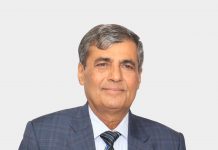
Dateline Doiwala: Swami Rama Himalayan University (SRHU), Jolly Grant, has added yet another global recognition to its name. This global ranking has been jointly released by Elsevier and Stanford University, California (USA), 2025, which annually identifies the top 2% of scientists worldwide.

The database analysis conducted by Stanford University and published by Elsevier assessed more than one lakh scientists working across diverse research domains. Dr. Mukesh Prasad Bijlwan earned recognition in the field of Nuclear Chemistry, while Dr. Gunjan Chhabra was honored in the area of Information and Communication Technology. Their inclusion in this prestigious list reflects the international impact of their contributions to research and scholarship.

Both Dr. Bijlwan and Dr. Chhabra explained that the ranking was not determined merely by the number of research publications, but by stringent parameters including quality of publications, the impact of journals (publication in reputed international journals), and citations of their work in other scientific studies.

Congratulating the achievers, SRHU President Dr. Vijay Dhasmana said that this international recognition further elevates the reputation of the university. The selection of two faculty members by such a reputed process is a testimony to SRHU’s strong research culture and commitment to academic excellence. He noted that this is the second time SRHU professors have been included in the global list, an achievement that boosts the morale of the institution and inspires students who gain directly from the knowledge and expertise of these globally recognized scientists.

SRHU is also associated with Nobel Laureate from Israel, Dr. Aaron Ciechanover, and has entered into collaborations and MoUs with several renowned international institutions and universities.

Himalayan Hospital Introduces Painless Laser Treatment for Haemorrhoid

0

Dehradun (Doiwala)] – Dr. Vijay Dhasmana, Hon. President, Swami Rama Himalayan University (SRHU) inaugurated a state-of-the-art Laser Surgery facility for the minimally invasive treatment of haemorrhoids in Dept. of General Surgery at Himalayan Institute of Medical Sciences.

In his address, Dr. Vijay Dhasmana highlighted the hospital’s ongoing commitment to innovation: “Himalayan Hospital, Jolly grant, has always been dedicated to patient-centric healthcare and the promotion of advanced medical technologies. Facilities like laser treatment strengthen our position as a leading healthcare centre, ensuring safe, convenient, and high-quality care for patients.”

Speaking at the inauguration, Dr. Hemant Nautiyal, Head of the Department of Surgery, said: “Laser Hemorrhoidoplasty (LHP) provides a painless and bloodless alternative to conventional surgery. Patients benefit from faster recovery, less discomfort, and can return to their daily activities much sooner.”

The event was attended by Principle Dr Renu Dhasmana, Director (Hospital Service) Dr. Hemchandra Pandey ( Designation), Surgeons, residents, and hospital staff.

First Surgery Performed Successfully
On the same day of the inauguration Dr Hemant Nautiyal performed the first surgery using the laser technology. The procedure involved minimal pain and no bleeding. This early success demonstrates the safety, effectiveness, and patient-friendly nature of the technique.
What is Laser Hemorrhoidoplasty (LHP)?
• LHP is a modern, minimally invasive treatment for haemorrhoids.
• It uses laser energy to shrink swollen hemorrhoidal veins.
• The procedure is bloodless, virtually painless, and requires no stitches.
• Patients recover quickly and return to daily activities in a short time.

 6cm Brain Tumor Removed from One & Half-Year-Old

0
Doctors at Himalayan Hospital Jolly Grant have achieved a historic success by removing a 6-centimeter craniopharyngioma (brain tumor) from the brain of a one-and-a-half-year-old child.

Dateline Doiwala: Doctors at Himalayan Hospital Jolly Grant have achieved historic success by removing a 6-centimeter craniopharyngioma (brain tumor) from the brain of a one-and-a-half-year-old child. The doctors have called it the largest tumor of its kind to be operated on in a child so young in India. A team led by neurosurgeon Dr. Brijesh Tiwari performed the surgery and saved the child’s life. The child has fully recovered.

Dr. Brijesh Tiwari of the Himalayan Hospital Neurosurgery Department explained that the family of one-and-a-half-year-old Ahmed, from Bahadrabad in Haridwar district, brought the child to the neurosurgery department three months ago with a growing head size, inability to walk, and difficulty seeing. After some preliminary tests and an MRI, doctors discovered a massive, 6 cm high-risk craniopharyngioma (brain tumor) near the pituitary gland. Despite being benign, the tumor’s size and critical location made it a major challenge for the medical team. Dr. Tiwari noted that brain surgery on a young child is extremely delicate, as the structures are very small. The tumor’s massive size and critical location made the surgery highly risky. The team had to be exceptionally precise to remove the entire tumor without damaging surrounding brain structures. The neurosurgery and anesthesia team formed for the surgery discussed all possible scenarios.

Subsequently, a team led by neurosurgeon Dr. Brijesh Tiwari, along with Dr. Sanjeev Pandey, Dr. Ankit Bhatia, and anesthetist Dr. Veena Asthana, successfully performed the complex surgery. Dr. Ranjit Kumar, Head of the Neurosurgery Department, hailed the brain tumor surgery as a major achievement for the hospital, made possible by excellent teamwork. Following the successful surgery, the child was placed under the expert post-operative care of Dr. Ashish Simelty of the Pediatrics Department to ensure smooth recovery. The child is now completely healthy and can walk, talk, and play.

Dr. Hem Chandra, Director of Hospital Services, and Dr. Rajesh Maheshwari, Medical Superintendent, congratulated the entire team on this significant achievement by the neurosurgery department.

Surgery Performed Free of Cost Under Ayushman Bharat
Dr. Brijesh Tiwari stated that the child’s surgery was performed completely free of charge under the central government’s Ayushman Bharat scheme. This prevented any financial burden on the family. He added that all types of brain tumor surgeries are being performed at the hospital under this scheme. Patients from Uttarakhand no longer need to travel to Delhi or Chandigarh, as they can now receive world-class brain tumor treatment at Himalayan Hospital.

Himalayan Hospital Becomes a State-of-the-Art Center for Brain Tumor Surgery
Dr. Vijay Dhasmana, President of Swami Rama Himalayan University, congratulated the entire team on this historic achievement. He said that Himalayan Hospital has developed into a state-of-the-art center for brain tumor surgery. He mentioned that the neurosurgery team, equipped with cutting-edge microscopes, endoscopes, drills, CUSA systems, high-tech operation theaters, and advanced anesthesia machines, is providing world-class treatment to patients.

Gone but not forgotten Dana Crider

0
Mr. Dana Crider

Dateline Mussoorie: Condolence messages poured in on social media on the passing away of Mr Dana Crider, Chairman KEEN (Keeping The Environment Ecologically Natural), Mussoorie.

Dana Crider was the Founder and Chairman of KEEN (Keeping The Environment Ecologically Natural) an organization committed to waste management in Mussoorie. An entire generation had the privilege of witnessing his tireless efforts to promote cleanliness and care for one’s surroundings.  Dana led by example and reminded everyone that keeping our community clean was not a chore, but an act of pride and responsibility.

Mr Dana Crider with his family

Born in Pennsylvania, USA, Mussoorie had been home to the Crider’s since 1979. A Maths teacher at Woodstock School, he is remembered by generations of students as a strict but loving teacher.

A highly God fearing man and an integral part of the Union Church and the Christian Community in Mussoorie, his biggest contribution to Mussoorie was the organization KEEN, which he founded to handle the Waste Management in a town he loved dearly. Dana was deeply respected for his efforts by not only the Landour community but the town at large.

Today, KEEN has grown in strength. The organisation not only keeps the town clean but is a big source of employment for the most marginalised sections of society, many being women and the sole bread winners of the family. Even during Covid this was the only organization which was working relentlessly on ground to keep the town clean.

Mr Crider put in his entire life savings, including his and his wife’s retirement funds to start KEEN. Today the establishment is a shining example  of how public-private enterprise came to bear fruit in a town he called home. The best homage for Mr Crider was that recently Mussoorie ranked No. 1 in Swachhta Survekshan Uttarakhand.

Lying under the Deodars he loved so much, facing the eternal snows in perpetuity, he leaves behind his wife Judy Crider, his two sons, the KEEN family and a community indebted to his vision and mission.

Puppeteers wow students in Mussoorie

0
A show put together by the The Puppet Lab workshop

Dateline Mussoorie: The Puppet Lab was hosted by the Centre for Imagination and the Visual and Performing Arts Department at Woodstock School, Mussoorie for a two week workshop supported by Serendipity Arts Festival. UNIMA Puppeteers Trust India created this Lab to invigorate, renew and explore fresh approaches. The event brought together nine puppeteers who practice Glove, Shadow and String Puppet forms from six states of India – Karnataka, Kerala, Tamil Nadu, Rajasthan, Delhi, West Bengal and Maharashtra. These young puppeteers from the traditional and folk forms collaborated, experimented and worked with each other in a first of its kind experimental incubator.

Shows using both tradition and some contemporary infusion

Throughout the two-week Lab, multiple expert facilitators and practitioners from the Lab also worked closely with the Middle Years students at Woodstock School, where they engaged in hands-on learning experiences in scriptwriting, storyboarding, narrative building and shadow puppetry.  Puppetry, particularly traditional or folk puppetry is probably one of the oldest art forms in India, with a 3000 year old history and twenty three living forms in existence currently, practiced by generational puppeteers across India.

Today these traditional puppeteers stand out despite OTT platforms, digital media and television churning out new content and grabbing eyeballs. Even in this scenario, Puppetry has been resilient and strong. Its steadfast quality and the highly evolved aesthetic of traditional forms, their tactility and the visceral experience makes them even more relevant today.

Students from St John School Mussoorie who witnessed the Puppet Show

The outcome of two week workshop was eight shows using both tradition and some contemporary infusion which was attended by students from Woodstock School and other local schools. Speaking to Newspost, Bimla Prasad, Principal St John School, Mussoorie who attended the show with her faculty and students from Grade 7-8 stated, “It was a lifetime experience for my students. They thoroughly enjoyed themselves and were amazed at the skills and presentation of the puppets. This is a show they would rarely witness elsewhere.”

REC-VoW Book Award Winners 2025 are…

0
VoW Book Awards winners 2025

Dateline Dehradun: Valley of Words ~ Shabdavali announced its 8 Winners of the REC-VoW Book Awards 2025 — celebrating the best of English literature, Hindi sahitya, and writings for young adults and children. Currently in its 9th edition, the Valley of Words Festival continues to host India’s most comprehensive independent literary awards. Each VBA Winner is offered a prize of INR 1 lakh along with a citation and panel discussion at the Finale in Dehradun on October 25th and 26th 2025.

Over 600 nominations were received in 2025 from 75 publishing houses across the country. The selection of the books involves a three-stage process, with the Shortlist and Winner selected by the VBA Winners of the previous year: for 2025, our Jury included Smriti Ravindra (The Woman Who Climbed Trees), Manoj Mitta (Caste Pride), Dr Jaiwanti Dimri (for Anjum Katyal; Truth/Untruth), Subhash Neerav (Ambar Pariyaan), Uday Prakash (Antim Nimbu), Dr Suresh Pant (Shabdon ke Saath Saath), Shabnam Minwalla (Zen) and Vibha Batra (The Chhau Champ).

Valley of Words 2025

Commenting on the REC-VoW Book Awards 2025, Festival Director Dr Sanjeev Chopra stated, “As in previous years, the response from publishers has been very positive. We also wish to thank all the Jury Members for their patient reading and insightful selections. Each of the books chosen this year is ambitious in its scope and covers themes which help us better understand ourselves and the world around us. We are all very much looking forward to engaging with the authors in Dehradun and bringing their work to audiences here.”


The REC-VoW Book Award Winners for 2025 are:

ENGLISH FICTION 

Swallowing the Sun by Lakshmi Murdeshwar Puri (Aleph)

ENGLISH NON-FICTION 

Ananda: An Exploration of Cannabis in India by Karan Madhok (Aleph)

ENGLISH TRANSLATION

Lavanyadevi translated from the Hindi by Banibrata Mahanta (Orient BlackSwan)

HINDI TRANSLATION

Bahattar Meel translated from the Marathi by Sulabha Kore (Radhakrishna)

HINDI FICTION

Suno Kabir by Soni Pandey (Lokbharti)

HINDI NON- FICTION

Bidaai De Ma! by Sudhir Vidhyarthi (Rajpal (Rajpal & Sons)

YA LITERATURE

art is a voice by Kripa (ArtsIntegrated)

CHILDREN’ S LITERATURE

Cactus Wants a Hug by Neil Flory (Hachette)

The Valley of Words community extends warm congratulations to each of these authors and their publishers. Please join us in conversation with the 8 winners of VBA 2025 at the 9th Edition of Valley of Words~Shabdavali, on the 25th and 26th of October 2025, at Hotel Madhuban in Dehradun.

Celebrate the Word—and beyond!

For further information, please visit www.valleyofwords.org or write to [email protected]

Teachers’ Day Becomes Historic as SRHU Secures Spot in NIRF Rankings

0
Teachers’ Day Becomes Historic as SRHU Secures Spot in NIRF Rankings

Doiwala: Swami Rama Himalayan University (SRHU), Jolly Grant, has added another significant achievement to its name in the field of higher education. In the National Institutional Ranking Framework (NIRF) 2025 announced recently, SRHU has secured a spot in the 101–150 rank band.

On this occasion, University President Dr. Vijay Dhasmana described this as a proud moment for the institution and extended congratulations to the entire university community. He stated, “This success is the result of the collective hard work of our teachers, researchers, students, and staff. It lays the foundation for even greater achievements in the future.

Outstanding Performance on NIRF Parameters

Among more than 1,200 universities across the country, SRHU has performed impressively on key NIRF parameters such as teaching, research, resources, graduate outcomes, and societal impact, earning this prestigious recognition.

Double Celebration on Teachers’ Day

Coinciding with Teachers’ Day, this NIRF achievement added to the joyous atmosphere on campus. The university administration, faculty members, students, and staff celebrated together with a cake-cutting ceremony, making it a double celebration.

The event was graced by Vice-Chancellor Dr. Rajendra Dobhal, Director General (Academic Development) Dr. Vijendra Chauhan, Pro Vice-Chancellor Dr. Ashok Dewarari, Dr. Renu Dhasmana, Registrar Commander (Retd.) Challa Venkateshwar, Dr. Pradeep Varshney, along with faculty from various colleges.

Already Accredited with NAAC ‘A+’ Grade

It is noteworthy that SRHU has already been awarded an ‘A+’ grade by the National Assessment and Accreditation Council (NAAC), which stands as a testament to the university’s commitment to academic excellence and quality.

This achievement is dedicated to the ideals of Gurudev Dr. Swami Rama, and receiving this recognition on Teachers’ Day makes it even more special. I extend my heartfelt congratulations to our faculty and entire team. The university continues to act as a ‘Compass of Life,guiding students and the community toward meaningful growth and contribution to society. We are committed to shaping new dimensions in education through innovation and quality.”
– Dr. Vijay Dhasmana, President, Swami Rama Himalayan University, Jolly Grant