











Fifteen years ago, I read and reviewed The Emperor of All Maladies: A Biography of Cancer by Siddhartha Mukherjee which had just won the Pulitzer Prize for non-fiction in 2011. Mukherjee described this Emperor as a ‘formless, timeless, and pervasive’ adversary which could strike at will, debilitating not just the person it attacked but also the entire ecosystem around her. Over time, researchers had made slow but sure and steady progress. The Emperor was known for its non-discriminatory nature – it afflicted one and all irrespective of age, gender, status, nationality and region. Mukherjee did an admirable job weaving a potentially chaotic and depressing story into something coherent and even hopeful. For despite the many tragic deaths which littered the pages of the book, the final impression was of how much could be accomplished when a researcher’s diligence, a doctor’s pledge to save life, and a patient’s will to live worked together.
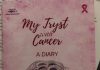
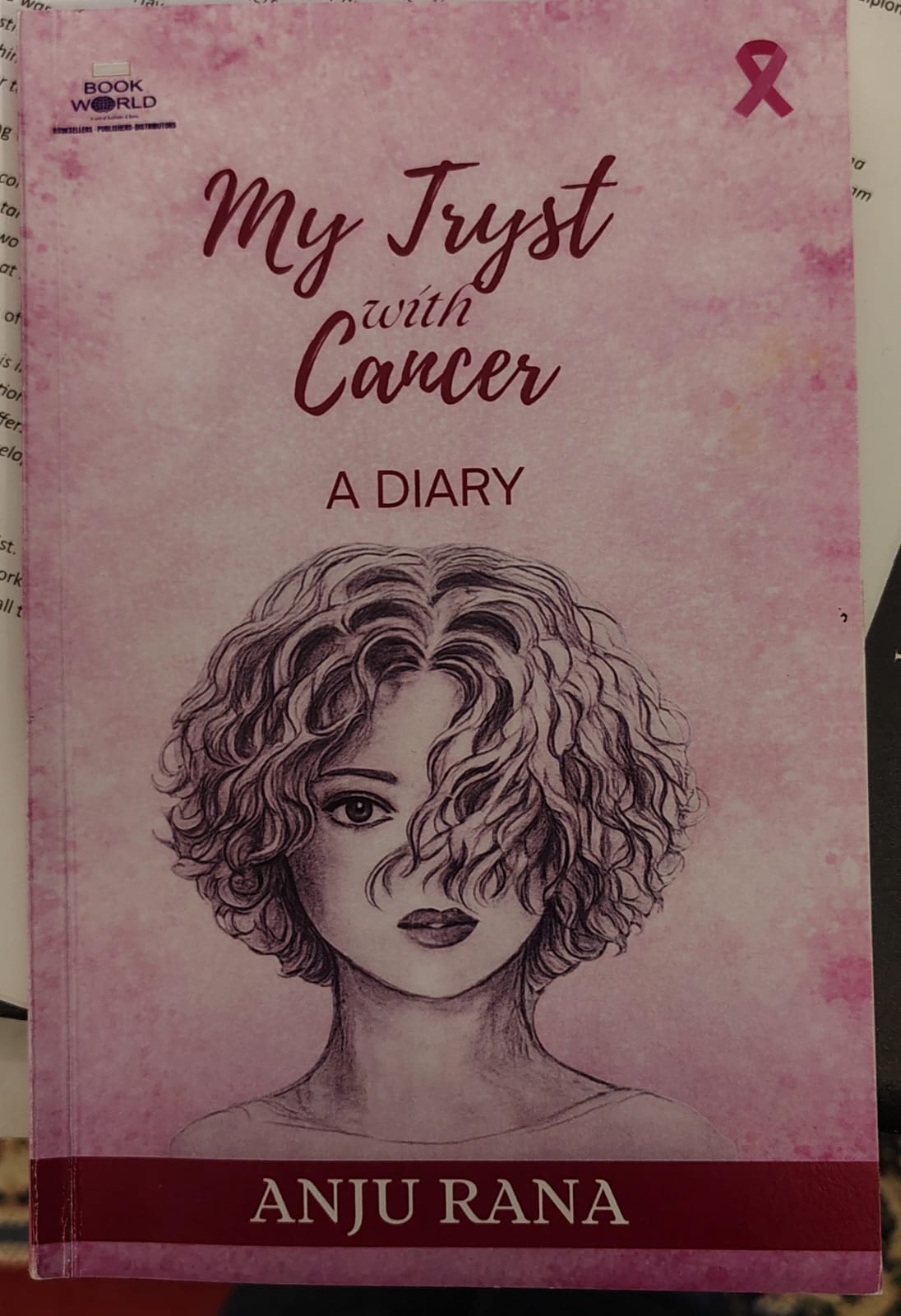
For me, the key takeaway was the patient’s will. And what better way to describe this than the review of My Tryst with Cancer: A Diary by Anju Rana, my vivacious neighbour at USHA Dehradun. She is our innovative emcee at tombola meets, giving a new tongue twister to each of the ninety-nine numerals, besides coming up with ever innovative ways of creating new prizes (along with the conventional ‘full house’ and four corners). When she was diagnosed with the Emperor of All Maladies, she not only decided to put up a fight but also to document it and later publish her memoirs for others to read — she endured the malady, and recorded a full recovery.
The book covers sixteen crucial months. From early symptoms of severe backache, abdominal rashes and a UTI in November of 2023 to hardness in the upper area of the breast in February 2024, the diagnosis and the treatment for breast cancer from March 2024 to the final conquest in May 2025. The narrative is spread out in the form of the journal entries on different dates which she wrote in a blue diary gifted by her elder son for a ‘cathartic experience’ and ‘to help divert the mind from the ill -effects of medicine’. Making these entries may have been difficult at times, but in retrospect they serve as reminders that ‘tough times don’t last, tough people do’. This then is the story of her eight rounds of chemotherapy, one major surgery followed by 9 cycles of immunotherapy, twenty sessions of radiation and eight cycles of oral tablets for chemo. Let me highlight some key points from the milestone entries in this Diary.
The first entry, dated 20th March, is from her parental home Ghaziabad as she copes with the aftereffects of hair loss – she writes that this made her feel like Peris Khambatta ! On 30th March she called the barber to shave off her hair, in the process reminded of her father who too had lost his hair early on in life. On 31st March she notes her gratitude for all the communication devices that keep her connected to the world at large in this difficult phase in which one can feel so alone. On 2nd April, she paid her tribute to researchers like Mukherjee, because of whom the malady is now curable.
Interspersed with her personal predilections come words of eternal wisdom like that of time being the best healer, and the importance of not holding any grudges. But there are moments of weakness: the thought of her Fauji son going to the Kashmir Valley on duty gives her sleepless nights. On 5th April, she recorded her therapeutic gossip sessions with her sister-in-law Priti, who had earlier insisted that she ought to take the symptoms more seriously. The entry on 10th April is interesting: it is a clear role reversal when the son offers parental advice on how much our protagonist should exert towards household chores. Two days later, she feels like Lady Diana ‘giving an audience to those who wish to call on her’.
We learn of her chemo cycles, and the process of coping with them. Even though each cycle leads to weight loss, she keeps her spirits high and on 12th May, she describes herself as ‘quite a cheerful cancer patient’. As she knows what to expect, she prepares herself for the aftereffects by engaging in reading, writing and OTT movies. The fifth cycle is scheduled in the month of May — when the mercury in the NCR is soaring — and there is a natural sense of relief when she returns to her home in Dehradun on 12th June. On the 14th of June she wonders about the laws of karma and whether this illness was a recompense for sins from the previous births. Monsoon arrives in July, but her entry on the first of this month is not about the joys of Sawan; it is about humidity, insects, snakes and slush! Her keen connect with her house-plants is clear from multiple entries, especially on 7th July. Twenty days later, the mood of detachment sets in, but by the first day of August, she has a feeling ‘Yes, I can do it’. She has been through five months of this battle, and realises that ‘the human body has immense capacity to tolerate and also to heal on its own’.
Entries on the 24th /26th/ and 31st August give a pen picture of the surgery on the 28th, her coping mechanisms, and the great sense of relief on her return to her sister’s house after surgery with family members surrounding her. She had a ‘normal lunch on the dining table’, but this was on account of the pain killers and the adrenaline rush. By 3rd September she records the nightmare of severe after effects in the following week.
Meerut is where her grandchildren waited excitedly for Amma to come back home. As she records in her entry on 21st September, this gave a big boost to her healing process. Ipso facto for her video interactions with the grandkids in Singapore. USHA figures twice in her account when she is on the road to recovery: first on 26th October to mark Diwali celebrations when she wears a ‘nice yellow suit, and a wig’ and then on 10th November when the ladies Club welcomed her as the Tambola Queen back in their midst. On 6th December her eldest teenaged grandson had his first ball dance with Amma, and she enjoyed a family wedding. Back in Meerut by the 22nd February of 2025, she looked forward to the golden Jubilee Alumni meet of Sophia school, and by 24th April the medication had stopped. The last entry on 16th May 2025 confirms that she had indeed emerged victorious in the battle with cancer! The Emperor of Maladies lost to this feisty woman, who emerged through this ordeal as a ‘better and more optimistic person’ who has thrown out Hurry, Worry and Curry from her lexicon, and replaced them Forgive, Forget, Patience and Gratitude.
But there are some nagging questions – especially about the many difficulties which CGHS card-holders have with some of the Max Hospital establishments, and the larger issue of overcrowding in government hospitals. Many readers of this column are likely to be covered by health insurance, but what of the vast majority for whom hospitalisation is unaffordable? Thanks to the PMJAY, some basic services are now available, but even then the out-of- pocket expenses are enough to upset the precarious balance in the life of people on the margins. Anju Rana has also flagged the issue of the break-up of the joint family – recalling an ideal when all the siblings, parents, parents-in-laws, nieces and nephews and other extended family was available and willing to extend financial, logistical and emotional support to those going through illness.
In fine, this is a book of hope, of courage, of fortitude, of friends and family, and most importantly, the need to stay positive — for the circumstances which surround us are never in our control, and it is our attitude to them which defines who we are and how we face them.