Page 28

Awareness campaign launched at Himalayan Hospital on World Leprosy Day

0

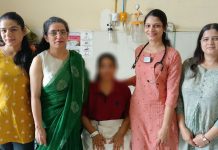
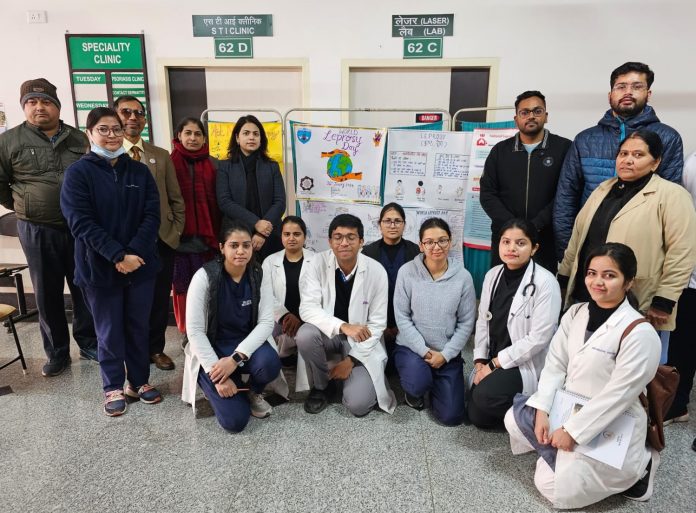
On World Leprosy Day, a public awareness campaign was conducted by the Department of Dermatology at Himalayan Hospital, Jolly Grant. During this, people coming to the OPD of the hospital were given information about leprosy.

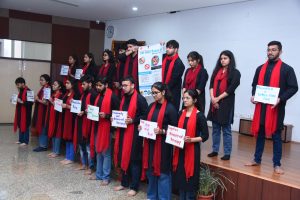
On Tuesday, the patients coming to the OPD and registration counter of the Dermatology Department were given questions and their answers related to leprosy. On this occasion, MBBS students conveyed to the general public information related to leprosy and its prevention through poster exhibition and street drama.

Head of the Department of Dermatology, Dr. Rashmi Jindal, while addressing the people present, gave information about the symptoms and treatment of leprosy. It is said that leprosy is caused by Mycobacterium. Its initial symptoms are formation of white and red spots on the skin, feeling of weakness along with numbness in hands and legs. He said that the department organizes such events every year to make patients aware about the social misconceptions related to skin diseases. Dr. YS Bisht said that if leprosy is treated on time, this disease can be completely cured. Dr. Samarjit Roy told the patients that it is a misconception that leprosy spreads through contact; this disease is not a disease of contact. Leprosy can be treated, depending on its type. Antibiotics are used to cure the infection, and treatment usually lasts for 6 months to a year. However, if the patient has problem of nerve damage then other treatments are used for this.

On this occasion, Dr. Dikshita, Dr. Ritu, Dr. Anuj, Dr. Arnav, Dr. Jagriti, Dr. Darshana, Dr. Vrinda, Dr. Sakshi, Dr. Shobhit, Dr. Tabir were present amongst others.

Dehradun holds first Roundtable on Climate Change & Health in Uttarakhand

0

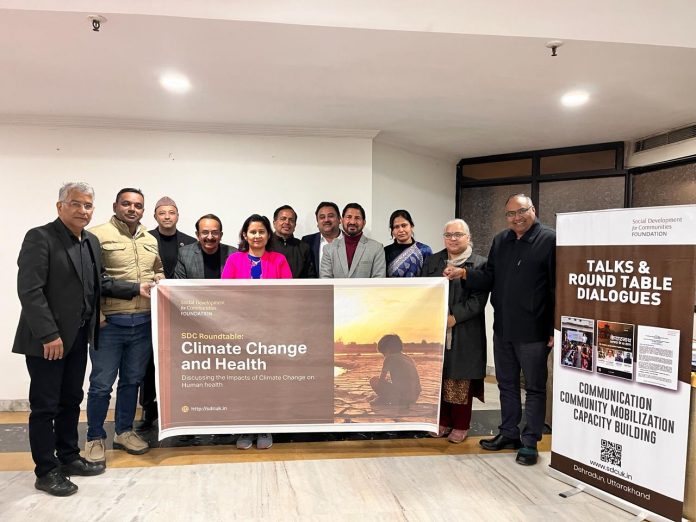
Dehradun: The city saw state’s experts and top-notch healthcare professionals come together for a first ever roundtable dialogue to discuss the implications of climate change on the physical and mental health of people in Uttarakhand.

The roundtable dialogue was organized by environmental action & advocacy group, SDC Foundation, and attended by those such as surgeon and writer Dr. Mahesh Bhatt; former Scientist at Wadia Institute of Himalayan Geology Dr. P.S. Negi; Chief Medical Officer (CMO) LBSNAA, Mussoorie Dr. Mayank Badola; gynaecologist Dr. Meghna Aswal; former Additional Director, Uttarakhand Health Dept, Dr. S.D. Joshi; UNDP State Head Uttarakhand Dr. Pradeep Mehta; Fellow at Centre for Ecology, Development and Research (CEDAR) Dr. Nidhi Singh; Uttarakhand Health Department’s IEC Officer Anil Sati; Social worker Rakesh Bijalwan; Founder SDC Anoop Nautiyal and Lead Research & Documentation SDC Prerna Raturi.

Dr. Mahesh Bhatt began the roundtable and expressed concern at how there was an immediate need for bringing climate justice to the table when talking about climate change. “I might be using two cars, air-conditioning and 10 light bulbs in my house and be safe. However, my cousin in a remote village in Uttarakhand might witness his fields being washed away from a cloudburst, which happened due to climate change, in which I too have played a part,” said Dr. Mahesh Bhatt.

Agreeing to how everything is interconnected, Dr. PS Negi cited the example of how particulate matter emitted from fires and fossil fuels are increasing the temperatures and becoming a cause for receding snowlines and glaciers. “Climate change affects everything – ecology, economy, health, and wellbeing. Entire species of medicinal plants in the Higher Himalayas are at risk.

Dr. Mayank Badola said that Uttarakhand government is working on bettering its healthcare in the face of climate change by capacity building, IEC robustness, and making healthcare facilities less polluting. “We need more efficient surveillance systems and detection systems for diseases, especially those that are vector borne,” he said, adding, “Those living in the mountain areas and coastal regions are most susceptible to climate change. Thus, there is as much a need for mitigation as adapting measures.”

Dr. Meghna Aswal brought her own experiences to the fore and shared how she has seen a direct connection between rising atmospheric temperatures and preterm labor and heat stress in pregnant women, as well as low birth weight and fetal distress in newborns. “Even as covid was taking its toll, we actually saw a decrease in asthma patients due to low air pollution levels. Scientific evidence also shows a connection between air pollution and neurodevelopmental and neurodegenerative disorders,” she said.

Dr. S.D. Joshi shared how he once saw a post mortem report of a young male with black lungs and he wasn’t a smoker; he worked in the transport sector. “Microplastics, black carbon and so many other forms of pollution are causing a surge in diseases such as strokes, heart attacks, diabetes, thyroid dysfunction, and so on,” he said.

UNDP’s Dr Pradeep Mehta spoke with reference to the entire Himalayan belt and said his own studies and work had shown entire apple belts vanishing and even several varieties of rajma becoming extinct. “Our culture of crop diversity and bara anaja (12 grains) is fast dying, which is impacting our nutrition intake. Studies show that the number of climate migrants has far overtaken the number of war migrants, which is a cause for extreme worry.”

Dr Nidhi Singh of CEDAR pointed out how climate change and health is a complicated and complex issue, and said that even though stopping development is not the answer, we need to focus more on impact-based development rather than need-based development. “It is also crucial that we bring discussions on gender equality, disability and social inclusion (GEDSI) to the table. After all, it is women, children and the disabled who bear the brunt of any catastrophe,” she said.

Information, Education and Communication (IEC) Officer Anil Sati talked about the increase in vector-borne diseases in not only the plains and valleys of Uttarakhand but also the higher reaches of the hills. “Dengue lasts for months now and people in the far-up Chamoli district were affected by it. Somewhere and somehow, we are all responsible for climate change and need to change our habits and lifestyles.”

Social worker Rakesh Bijalwan, who works in the field of migration and reverse migration questioned mindless consumption and the pattern of chaotic urbanization. “Yes, we all are looking forward to changing our diesel and petrol cars to electric vehicles (EVs), but have we stopped to think the pollution caused from these car batteries, which is far more than those from hybrid or internal combustion models,” he said, underlining the need for mindful consumption and better public transport.

SDC Foundation’s Anoop Nautiyal and Prerna Raturi expressed gratitude to the participants and said this was the beginning of bringing discussions on health and climate change to the fore in Uttarakhand. “We urge everyone to take this crucial issue to their networks and forums so that we can come up with strategies for both mitigation and adaptation to climate change.”

IHBT team Palampur visits SRHU

0

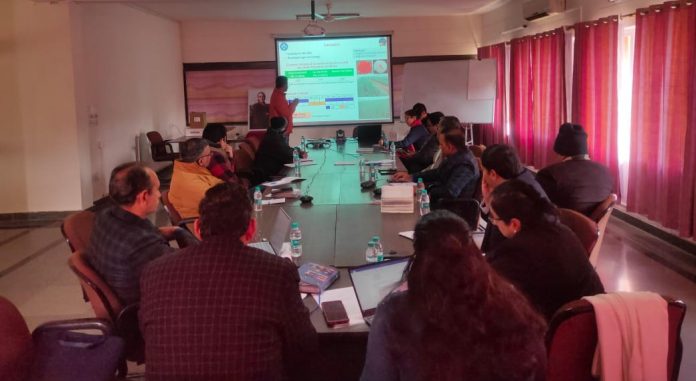
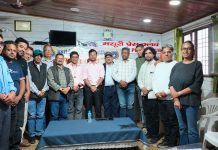
A five-member team of scientists, comprising Dr Rakesh Kumar, Dr Mahesh Gupta, Dr Mohit Sharma, Dr Bhavya Bhargava and Dr Rakshak Kumar(online) from the Institute of Himalayan Bioresource Technology (IHBT), Palampur visited Swami Rama Himalayan University, Jolly Grant in furtherance of the MoU signed between CSIR-IHBT, Palampur and SRHU, Dehradun.

Presentations were made by the IHBT team on their current R & D; protocols developed, patents obtained and technology transferred to multiple stakeholders including many startups, companies, farmers and clusters pan India. Major focus was on sharing of end-to-end technologies developed under CSIR Floriculture Mission Phase II; CSIR Aroma Mission Phase III; Organic Farming; Food & Nutraceuticals; and Bio-process technology for Bioactive Medicinal and Aromatic plants.

SRHU team shared their core R & D interests; assistance in cluster development for good quality local spices i.e. Haldi, Kesar, Hing and Ginger; their quality assurance & processing for marketing through the Rural Development Institute’s field units & Toli campus, Pauri Garhwal; floriculture, and local fruit-drying technology such as for apples being an integral part of the process.

The Vice Chancellor of SRHU advised to initially focus on 4-5 areas for effective ground-level implementation. He suggested sharing of knowledge by IHBT for setting-up the Herbal Garden being develped by the Himalayan School for Pharmaceutical Sciences (HSPS) in an area of five acres within the campus for growing a variety of local herbs. A project for growing Shiitake mushroom by training of suitable researchers at IHBT; exchange visit of scientists from SRHU to IHBT in mid-April, 2024; and training of faculty & research fellows at IHBT were also agreed upon.

Students of SRHU Jolly Grant donate blood on ‘Parakram Diwas’

0
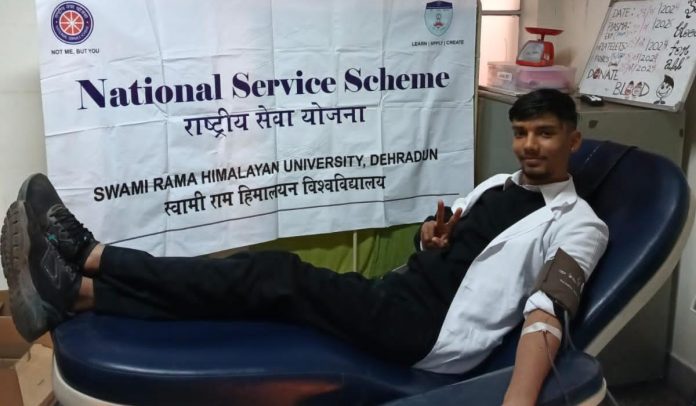
A blood donation camp was organized at Swami Rama Himalayan University (SRHU)

Doiwala- To commemorate the birth anniversary of the great leader of the Indian freedom struggle, Subhash Chandra Bose, a blood donation camp was organized at Swami Rama Himalayan University (SRHU), Jollygrant.

40 units of blood were collected in this voluntary blood donation camp. Doctors gave information about the misconceptions related to blood donation and its benefits. In this, students associated with the National Service Scheme (NSS) of Himalayan College of Nursing participated enthusiastically. Addressing the program organized on this occasion, Dr. Manish Raturi, in-charge of the blood center, said that apart from Hepatitis (B and C), apart from syphilis, HIV, malaria, blood group and haemoglobin, blood donors should also be tested for their overall health. He said that the objective of the voluntary blood donation camp was to spread awareness amongst the people about blood donation.

Nursing students were given information about different blood groups and the uses of various components of blood. Dr. Raturi said that any healthy man or woman whose weight is more than 45 kg can donate blood between the age of 18 to 60 years.

Principal of Nursing College, Dr. Sanchita Pugazhendi said that blood donation is the biggest donation. He asked the students to inspire others to donate blood. Nursing College Faculty Chandan Kumar, PRO KC Joshi, Technician Aditya Veer Sehrawat, Shashi Bhatt extended their support in the voluntary blood donation camp.

Ghenja festival, one for the ladies!

0
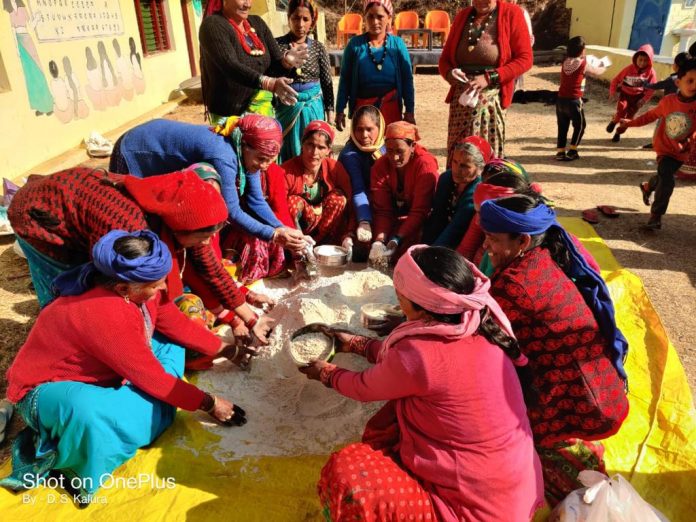
Hands-on making Ghenja

This one is for the ladies. Ghenja an annual festival is celebrated in Tehri and Uttarkashi district on the 28th day of the Poush month in the lunar calendar is dedicated to women.

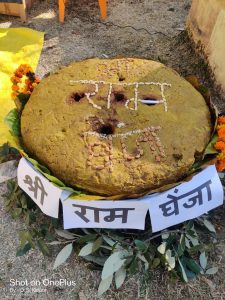
An exclusive festival for married women who come out in all their fineries  to celebrate the end of severe winters. The festival is celebrated with the preparation of a traditional culinary delight called Ghenja. The dish is prepared from indigenous grains Jhangora, Koni, Koda, and Maize flour and  crafted in circular form. These delectable creations are gently steamed between lemon and oak leaves and served with tea.

Inaugural committee of the Ghenja festival

The festival was hosted in Bamura Dham, Herawal Gaon, in Pratapnagar, Tehri Garhwal. What made the event even more endearing was the fact that over four hundred homemakers took part in a Ghenja making contest which carried cash prizes not only for the winners but the participants too.

The expert jury panel comprised of Rohini Singh and Ankita Bisht, scholars from the Home Science Department of HNB Garhwal University. Sangeeta Panwar, an educator from Uttarkashi. Millet experts Pavitra Rana and Rakhi Rana from “Garh Bhoj” Uttarkashi including Poorna Devi, an octogenarian homemaker from Herwal Gaon. The jury not only tasted but also discussed the art of making Ghenja with the contestants.

The 121 kg Ghenja for Ram Prathishta

The highlight of the Festival was unveiling the world’s largest Ghenja, weighing 121 kilograms, dedicated to the Pran Partishtha of Shri Ram Mandir in Ayodhya.

Mr. Virendra Rawat, the man behind the event expressed his vision of giving this traditional culinary delight a national and international recognition.

The Chief Guest for the event Dinesh Semwal lauded the event as it reconnected hillfolks with traditional customs, cuisine and culture.  Shailendra Singh Negi, Sub-District Magistrate of Pratapnagar, highlighted the health benefits of consuming coarse grains and urged people to follow traditional practices for better health.

Other dignitaries, included Bhajaram Panwar and  Mahipal Singh Rawat.  The organizing committee, comprised of Dinesh Kalura, Chandrashekhar Panyuli, Vijay Pokhriyal and Mangal Singh Panwar.

‘Science of Joyful Living’ organized by Himalayan College of Nursing

0

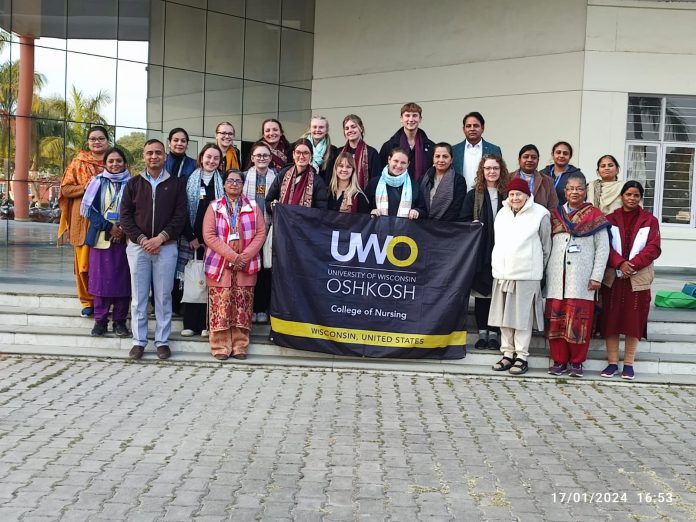
Himalayan College of Nursing (HCN) Jollygrant organized a one day workshop on ‘Science of Joyful Living’ based on the teachings of the most revered Gurudev Dr. Swami Rama. Nursing students from University of Wisconsin Oshkosh (UWO), USA participated in the workshop. Chancellor Dr. Vijay Dhasmana provided detailed information about the concept of healthy mind and healthy body.

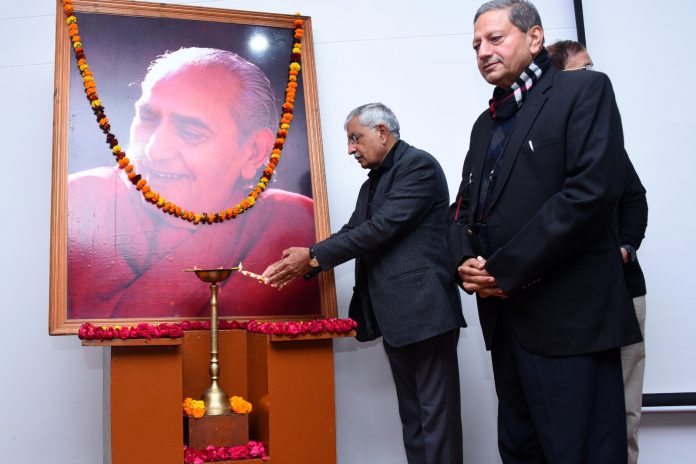
The workshop organized in the Nursing College auditorium on Wednesday was formally inaugurated with the lighting the lamp in front of the portrait of founder Dr. Swami Rama. Dr. Vijay Dhasmana, Chancellor of Swami Rama Himalayan University (SRHU), Jolly Grant, said that just as right eating habits and regular exercise are necessary to keep the body healthy, similarly, pranayam for breathing and meditation are very important to keep the mind calm. Earlier, Vice Chancellor Dr. Rajendra Dobhal informed the students of the University of Wisconsin Oshkosh (UWO), USA about the work being done by the university on medical education and research. During this time, Nursing College Principal Dr. Sanchita Pugazhendi, UWO faculty, Dr. Heidi Hansen, Dr. Maria Graf, Dr Kathy, Dr Kamli Prakash and the college faculty were present.

70 percent of diseases arise from mental disorders
Chancellor Dr. Vijay Dhasmana stated that in the year 1968, Gurudev Dr. Swami Rama had said that 70 percent of physical diseases are caused by mental disorders. Meditation is necessary to control the mind. At present, modern medical science is also stating the same thing.

Breath is the link between body and mind
Director General (Academic Development) Dr. Vijendra Chauhan threw light on the teachings based on yoga and meditation of Dr. Swami Rama. He said that breathing is the link between body and mind. Calmness of mind is necessary for a healthy body. Meditation is important to calm the mind. Due to calmness of mind, positive energy will remain within us.

Balanced diet provides more energetic
Addressing the workshop, SRHU Nursing Director and Senior Ophthalmologist Dr. Renu Dhasmana said that the overall health of a person depends on good nutrition, physical exercise and healthy body weight. A balanced diet makes us feel more energetic and it also affects our mood.

HCN Jollygrant and University of Wisconsin Oshkosh, USA launch cleanliness program

0
Himalayan College of Nursing (HCN), Jolly Grant and University of Wisconsin Oshkosh (UWO), USA, PEN-India School Bhaniyawala,

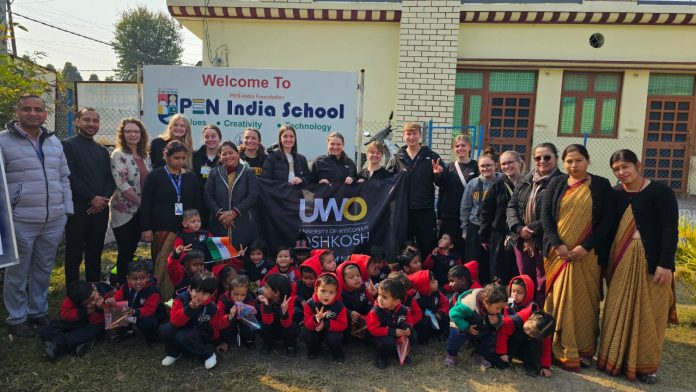
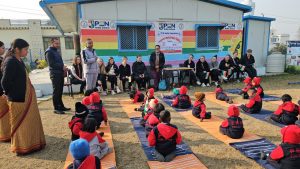
Himalayan College of Nursing (HCN), Jolly Grant and University of Wisconsin Oshkosh (UWO), USA, PEN-India School Bhaniyawala, organized an awareness camp on dental and physical hygiene. The students gave information to the children about dental hygiene, physical hygiene and healthy diet through posters and skits.

On Tuesday, under the guidance of Dr. Sanchita Pugazandi, Principal of Himalayan College of Nursing, Jolly Grant, a 10-member nursing student team from UWO, USA reached PEN-India School, Bhaniyawala. The students of the school welcomed the American nursing students by presenting the tricolor national flag. After this, nursing students from UWO, America gave information about physical hygiene and eating habits to the children through posters and drama. They created awareness about dental hygiene through models and later distributed stationery items including tooth brush, toothpaste and fruits to all the children of the school.

On behalf of PEN-India Foundation (PIF), Co-Founder Santosh Budakoti informed the nursing students about the social welfare work being done by the Foundation and also presented them a smiley token. Heidi Hansen and Dr. Maria Graf, Senior Nursing Faculty of UWO, USA, described the welcome with the Indian national flag as a matter of pride.

PIF Founder Anoop Rawat expressed his gratitude to the students for organizing the health and awareness camp. HCN faculty Atul Chaudhary, school teachers Deepalika Negi, Ritu Sharma, Deepali Topwal, Nirmala Gusain, Seema Chauhan etc. helped in making the camp successful.

Five teachers of HSYS Jolly Grant receive ‘International Yoga Samman’

0

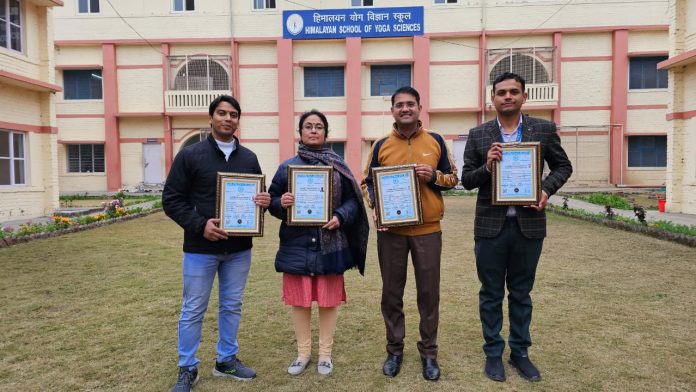
Five teachers of Himalayan School of Yoga Sciences (HSYS) Jollygrant were honoured with the ‘International Yoga Samman’ by the International Yoga Therapists Association.  Teachers were honored in various categories at a function organized in Kanpur.

Five teachers of the Yoga College, Swami Rama Himalayan University (SRHU), Jolly Grant namely Dr. Ajay Dubey, Dr. Somlata Jha, Dr. Ramnarayan Mishra, Rahul Baluni and Dr. Ankit Sharma set records by receiving awards in various categories. They were honoured with the award from the International Yoga Therapists Association for their remarkable contribution in the field of Yoga.

There is an atmosphere of enthusiasm in the  campus due to this achievement of the teachers. At a  ceremony organized in Kanpur, about 200 yoga teachers from the country and the world including HSYS were honoured with appreciation letters.  The university administration has extended best wishes to all the honoured teachers.

Awareness workshop was organized at SRHU on National Youth Day

0

On the occasion of National Youth Day, an awareness workshop was organized at Swami Rama Himalayan University (SRHU) Jolly Grant on various topics related to youth including drug abuse, road safety and cyber crime.

On this occasion, the speakers called upon the youth to take inspiration from the life of Swami Vivekananda.

An awareness workshop was organized by the Rural Development Institute, Himalayan Institute Hospital Trust in the Adi Kailash Auditorium of the University. The workshop was inaugurated by lighting the lamp in front of the portrait of founder Dr. Swami Rama.

Students of Government Sanskrit Bharat Mandir Secondary School chanted mantras at the time of lighting the lamp. Chief guest of the function, former IAS Dr. Sanjeev Chopra said that even in the present times, the principles and teachings of Swami Vivekananda are as relevant as they were in the past. Appealing to the youth, he said that in today’s era, there is a need for such efforts in which the youth can be organized and transformed into a comprehensive movement against drugs.

HIHT Presidential Committee member Dr. Vijendra Chauhan said that today is the era of youth, in which they are providing a new direction and energy to the country. But with time, the increasing inclination of youth towards drugs, increasing threat of cyber crime and increase in the number of road accidents year after year is worrying. Awareness is necessary in this regard.

In the workshop, Dr. Jayanti Semwal talked about drugs, CO Rishikesh Anwar Khan talked about road accidents, Jolly Grant Police Outpost Incharge Sumit Chaudhary talked about cyber crime and Joint Director Secondary Education Dr. Anand Bhardwaj talked about drugs, cyber crime and road accidents and gave a detailed presentation on the contribution of the department.

Students of Aryan Group at Himalayan Institute of Medical Sciences (HIMS) Jolly Grant conveyed the message of protection against drugs, cyber crime and road accidents through a drama. Dr. Rajiv Bijlwan, Vikesh Semwal, Payal Bhatt, Nagma, Kamal Joshi, Pawandeep, Nirmala Bijlwan, Digvijay, Jyoti Sharma, DP Uniyal, Naresh Thapliyal, Vivek Anand were instrumental in organizing the program under the leadership of Dr. Neha Sharma and Dr. Nancy Barthwal, Pankaj, Naval and others.

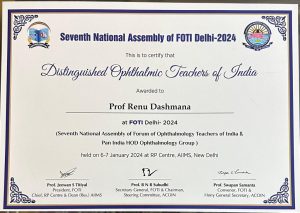
Dr. Renu Dhasmana honored with ‘Ophthalmology Teacher National Award’

0
Dr. Renu Dhasmana being felicitated at the event

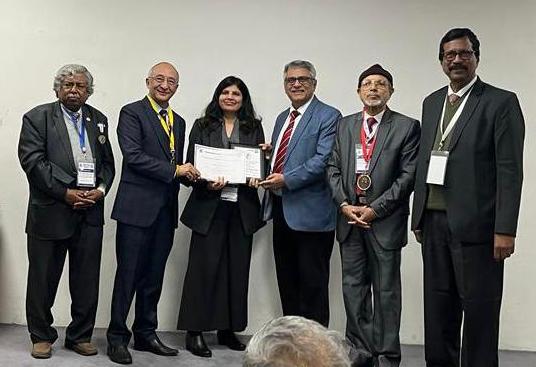
Dateline Dehradun:   Dr. Renu Dhasmana, Head of the Department of Ophthalmology, Himalayan Institute of Medical Sciences (HIMS) Jollygrant, was honoured with the ‘Ophthalmology Teacher Award’ by the Faculty of Ophthalmology Teachers of India (FOTI) at AIIMS Delhi.

The honour was conferred on Dr. Renu Dhasmana at a function organized during the seventh National Assembly of the Faculty of Ophthalmology Teachers (FOTI) at AIIMS Delhi. On this occasion, Dr. Renu Dhasmana said that she had been serving in the field of health and medical education with the inspiration of Gurudev Dr. Swami Rama.

Dr. Rajendra Dobhal, Vice Chancellor, Swami Rama Himalayan University (SRHU), Jolly Grant, congratulated Dr. Renu Dhasmana for this achievement and said, “Dr. Renu Dhasmana’s unwavering commitment towards excellence in teaching has set a commendable standard in the field of medical education.”
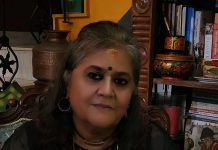
An eye surgeon, educationist as well as an efficient administrator, Professor Dr. Renu Dhasmana is has been working in the Department of Ophthalmology since 2004. She has done get Fellowship in Vitreoretinal Surgery from Shankara Nethralaya Chennai in the year 2010. In the year 2012, she was honored with the Best Doctor Award. She us the recepient of many national and international awards from various organizations. More than 100 of her papers and posters have been published in medical journals. Apart from this, she is a member of various ophthalmological societies. She has chaired many national and international seminars.

On receiving the honours, Senior Ophthalmologist Dr. Renu Dhasmana said,  “it is a matter of pride for me to receive this honour. Our commitment in the field of health care and medical education will become stronger.”