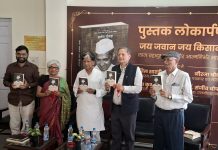


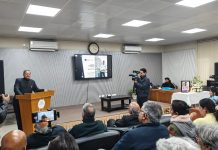



























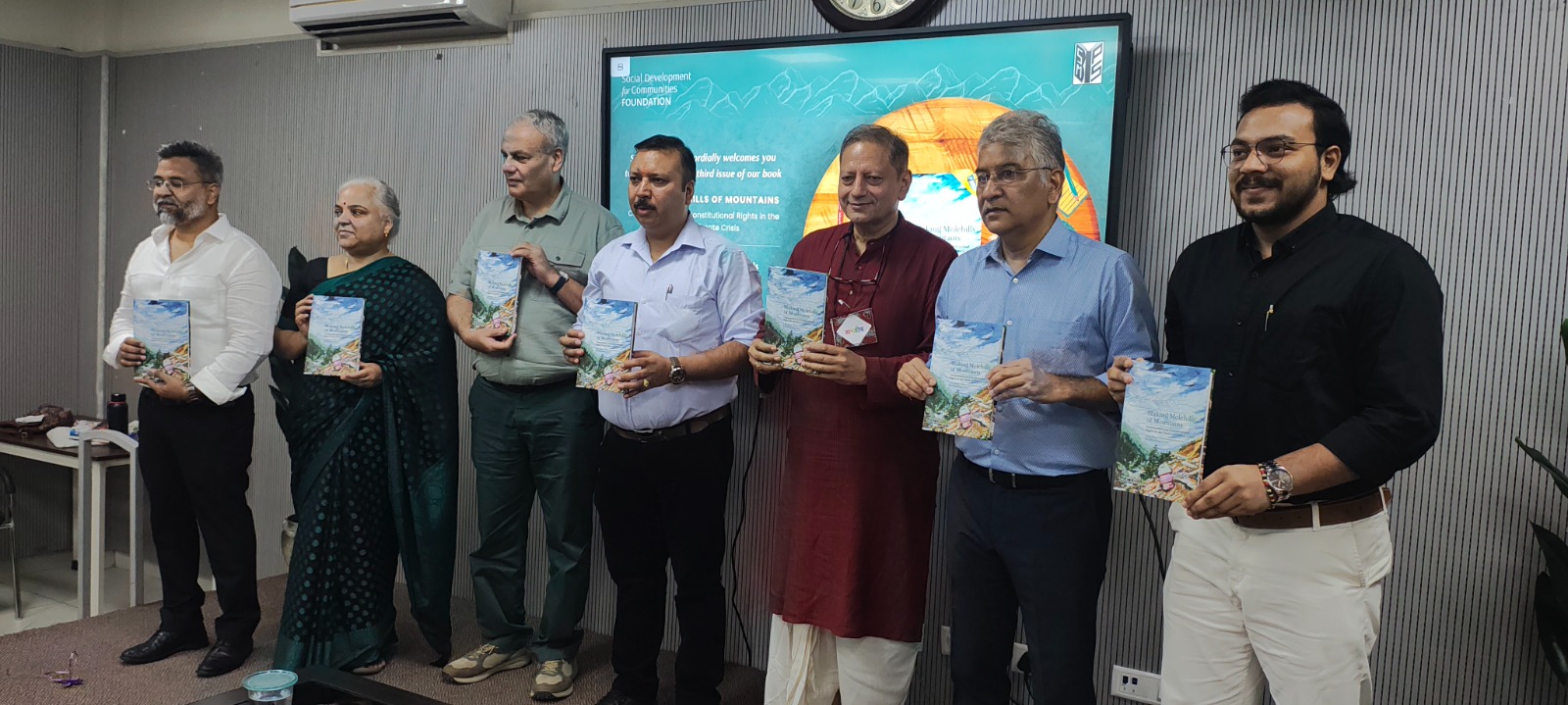
Dateline Dehradun: The third edition of Making Molehills of Mountains, published by SDC Foundation and Messrs Bishen Singh Mahendra Pal Singh, was launched today at Doon Library and Research Centre. The book, carrying the theme “Communities and Constitutional Rights in the Times of Climate Crisis,” brings together the interconnected questions of climate change, communities and constitutional rights in the context of Uttarakhand’s development and disaster narrative.
The third book in the Making Molehills of Mountains Series analyses 98 news reports of the key climate disasters drawn from the 12 monthly reports of January to December compiled under the Uttarakhand Disaster and Accident Analysis Initiative (UDAAI) for 2025. SDC had earlier brought out “Demystifying Disasters in Devbhoomi Uttarakhand” in 2023 and “Tales of Uttarakhand’s Climate Crisis and an Uncertain Development Model” in 2024 under the Molehills Series.
The foreword to the 2025 book has been written by Dr Sanjeev Chopra, former Director of the Lal Bahadur Shastri National Academy of Administration.
The analysis of the key 2025 climate disasters in Uttarakhand identifies five major red flags or patterns emerging from Uttarakhand’s recurring disasters, with leading experts contributing essays examining each concern.
The first red flag—“Chronic administrative delay, fragmented governance and accountability deficit in disaster prevention”—has been examined by Dr Murli Manohar Joshi, former Union Minister for Human Resource Development. The second, “Emergence of urban and semi-urban disaster landscapes,” has been addressed by urban thinker and architect Jagan Shah.
The third concern, “Glacial lakes, cryosphere change and the illusion of preparedness,” has been analysed by Dr Manish Mehta of the Wadia Institute. Dr Lokesh Ohri examines the fourth red flag, “Infrastructure-induced disaster risk and the crisis of mobility,” while Vaibhav Kala of Aquaterra Adventures addresses the fifth: “Ecological burden of mass tourism in a fragile Himalayan landscape.”
Keeping with the book’s focus on the “third C”—Constitution—the publication also examines the legal and constitutional dimensions of Uttarakhand’s development challenges. Aditya Rawat of UPES University writes on environmental laws and legislation in Uttarakhand over the past 25 years, while Gautam Kumar of UPES University examines delimitation from the perspective of Uttarakhand and its persistent migration problem. Prerna Raturi contributes a perspective rooted in the lived experience of a local resident of a hill station.
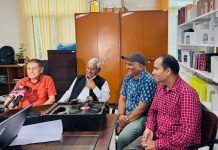
Introducing the programme, Chandra Shekhar Tiwari of Doon Library and Research Centre welcomed the participants. The programme was moderated by Dinesh Semwal of SDC Foundation.
The editors, Prerna Raturi introduced the book, while Anoop Nautiyal spoke on the importance of mainstreaming climate change, communities and constitutional concerns in Uttarakhand’s development narrative.
Contributors Dr Manish Mehta, Dr Lokesh Ohri and Gautam Kumar spoke about the issues explored in their respective contributions to the book. Abhimanyu Gehlot delivered the vote of thanks.
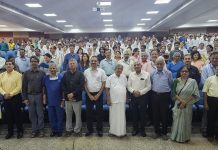
Large numbers of students and faculty members from Swami Ram Himalayan University, Shri Guru Ram Rai University, Sardar Bhagwan Singh University, Quantum University, Doon Business School, Tula’s University, Uttaranchal University, DIT University and Doon University attended the book launch.
The launch brought together several prominent citizens including Vibha Puri Das, Aloke Lal, JP Mamgain, Kripa Nautiyal, Jagmohan Mehdirarta, Abhimanyu, Avinash Chandra Joshi, Binita Shah, Piyoosh Rautela, Major Rahul Jugran, Devendra Budakoti, Ashustoh Kandwal, Ravi Juyal, Rakesh Kapoor, Parul, Raj Mohan, Kunal Uniyal, Paramjit Kakkar, Narendra Sethi, Pawan Lalchand, Anupam Trivedi and many other PHD students and young researchers.
The editors reiterated the need for more dialogue and discussions around climate change, communities and Constitution and encouraged experts and members of the civic society to come forward and contribute with their thoughts and prospective roadmap for the way ahead.